
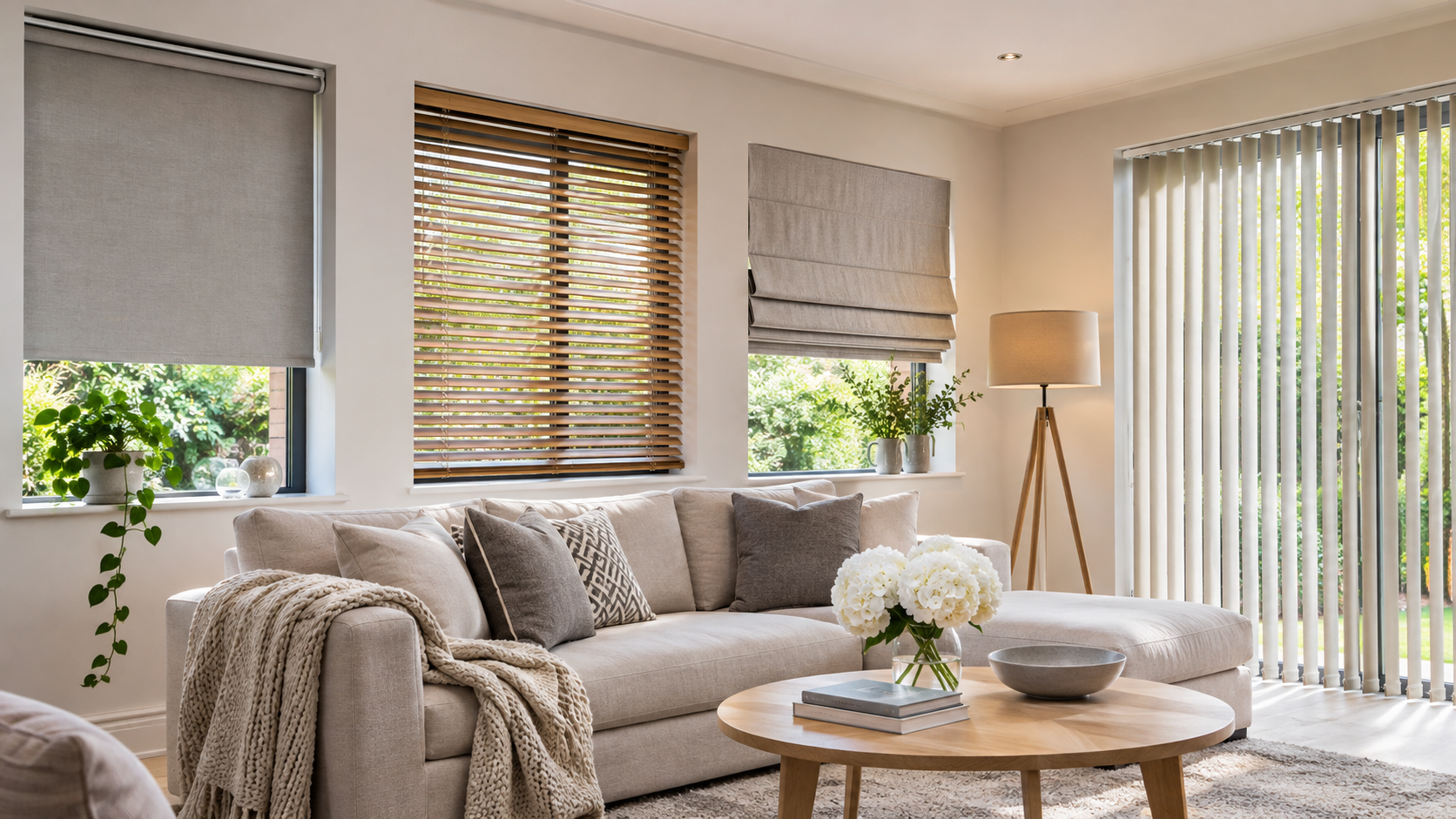
Choosing the right blinds can transform a room. They control natural light, improve privacy and complement your interior design. However, different styles offer different benefits, so finding the best option takes more than choosing a colour.
Roller blinds provide a clean, practical finish, while Venetian blinds offer adjustable light control. Roman blinds introduce softness and texture, and cellular blinds can help reduce heat transfer through windows.
This guide compares popular blind styles, materials and features. You’ll discover which options suit different rooms, what to consider before buying and how to measure your windows using our interactive calculator.
Types of Window Blinds: Which Style Is Right for You?

Window blinds come in several styles, each offering different levels of light control, privacy and practicality. Some suit modern living spaces, while others work better in bedrooms, bathrooms or large window areas. Understanding their main features will help you narrow down your choices.
Roller Blinds
Roller blinds use a single piece of fabric that winds around a tube above the window. Their simple design suits contemporary interiors and smaller spaces. Available fabrics range from translucent materials to blackout options, making these blinds suitable for living rooms, bedrooms and home offices.
They are generally easy to operate and maintain. However, standard roller blinds offer less precise light adjustment than slatted designs. Moisture-resistant fabrics are preferable in kitchens and bathrooms, while cordless or otherwise child-safe operating systems are important in family homes.
Venetian Blinds
Venetian blinds feature horizontal slats that tilt to control light and privacy. Common materials include aluminium, timber and faux wood. Their adjustable design makes them particularly useful in living rooms, kitchens and home offices.
Aluminium blinds are lightweight and moisture-resistant, while timber provides a warmer, natural appearance. Faux wood offers a similar look with better resistance to humidity. However, slatted blinds require regular dusting, and their gaps may allow some light into the room even when closed.
Roman Blinds
Roman blinds use fabric panels that fold into neat horizontal sections when raised. They create a softer, more decorative appearance than roller or Venetian blinds. Available in various colours, patterns and textures, they work particularly well in bedrooms, dining rooms and traditional living spaces.
Lined Roman blinds can improve privacy and reduce incoming light. Thermal linings may also help limit heat transfer through windows. However, fabric can absorb moisture and cooking odours, making these blinds less suitable for humid bathrooms or areas close to kitchen hobs.
Vertical Blinds
Vertical blinds feature individual slats that hang from a track above the window. The slats rotate to adjust light and privacy, while the entire blind can slide to one side. This makes them particularly practical for wide windows, patio doors and sliding glass doors.
Fabric and PVC are common material choices. Fabric offers a softer appearance, while moisture-resistant PVC is easier to wipe clean. However, vertical blinds can move in draughts, and their hanging slats may not suit every interior style.
Cellular Blinds (Honeycomb Blinds)
Cellular blinds use a honeycomb-shaped fabric structure that traps air within small pockets. These pockets help reduce heat transfer through windows, making cellular blinds worth considering for rooms affected by heat or cold. Options include light-filtering fabrics and blackout designs.
Their compact appearance suits modern interiors, bedrooms and home offices. Some models also offer top-down, bottom-up operation for flexible privacy control. However, cellular blinds often cost more than basic roller blinds, and their fabric pockets can be difficult to clean thoroughly.
Pleated Blinds
Pleated blinds use fabric folded into narrow, accordion-style pleats. Unlike cellular blinds, they usually have a single layer of fabric without insulating air pockets. Their slim profile makes them useful for compact windows, conservatories and certain roof windows.
Light-filtering fabrics provide privacy while allowing daylight into the room. Some systems also offer adjustable positioning for greater flexibility. However, pleated blinds generally provide less insulation than cellular designs, and their folds can collect dust.
Choosing the Best Blind Materials
Blind materials affect appearance, durability and maintenance. Fabric offers a wide choice of colours and textures, making it popular for roller, Roman and vertical blinds. However, some fabrics absorb moisture and may need careful cleaning.
Aluminium provides a lightweight, practical option for Venetian blinds. Natural timber adds warmth but may warp in humid conditions. Faux wood resists moisture better, making it suitable for kitchens and bathrooms. PVC is another easy-clean choice, although its appearance may not suit every interior.
The colour and finish of your blinds should also work with your walls. Our guide to choosing the best paint for interior walls can help you create a coordinated look throughout your home.
Best Blinds for Every Room in Your Home
The best blinds for every room depend on how you use the space. Bedrooms often need effective light blocking, while living rooms benefit from adjustable privacy and daylight. Kitchens and bathrooms require materials that can withstand moisture and regular cleaning.
Best Blinds for Living Rooms
Venetian blinds are an excellent choice for living rooms because their adjustable slats control daylight without sacrificing privacy. Roman blinds offer a softer, decorative alternative. For large windows or patio doors, vertical blinds provide convenient coverage and easy access.
Window blinds can also complement a wider room makeover. Explore our budget-friendly renovation projects for more practical ways to refresh your home without major building work.
Best Blinds for Bedrooms
Blackout roller blinds help reduce unwanted light, making them a practical bedroom option. Cellular blinds with blackout fabric offer an alternative with added insulation benefits. For a decorative finish, lined Roman blinds combine softness with privacy. Remember that gaps around the edges can still allow light into the room.
Best Blinds for Kitchens
Kitchens need blinds that resist moisture, cooking splashes and frequent cleaning. Aluminium or faux wood Venetian blinds offer adjustable light control and wipe-clean surfaces. Moisture-resistant roller blinds are another practical option, especially for smaller windows.
Avoid placing blinds too close to hobs or other heat sources. Fabric blinds can absorb cooking odours and grease, making them harder to maintain. Choose materials that suit the window’s position and follow the manufacturer’s installation guidance.
Best Blinds for Bathrooms
Bathrooms require blinds that tolerate humidity and occasional water splashes. Faux wood Venetian blinds and waterproof PVC roller blinds are suitable choices. Both offer privacy while remaining relatively easy to clean.
Natural timber and untreated fabrics may deteriorate in damp conditions. Choose products specifically rated for bathroom use, particularly near showers or baths. Good ventilation also helps reduce condensation and protects surrounding window fittings.
Best Blinds for Home Offices
Home offices benefit from blinds that reduce screen glare while maintaining comfortable daylight. Venetian blinds allow precise light adjustment, making them useful for windows near desks. Light-filtering roller blinds offer a simpler alternative.
Cellular blinds can also help improve thermal comfort during long working hours. Consider your screen position and the direction of sunlight before choosing. Adjustable blinds provide greater flexibility as lighting conditions change throughout the day.
Best Blinds for Large Windows and Patio Doors
Large windows and patio doors need blinds that cover wide areas without restricting access. Vertical blinds are a practical choice because their slats slide sideways along a track. Panel blinds offer another option, particularly for contemporary interiors and sliding doors.
Wide roller blinds can create a clean appearance, but maximum sizes vary between manufacturers. Consider the weight of the blind, operating mechanism and available mounting space. For frequently used doors, choose a design that opens easily without obstructing movement.
Choosing Blinds for Light Control and Privacy
Light control is one of the most important factors when choosing blinds. Blackout fabrics reduce incoming light and suit bedrooms or media rooms. However, small gaps around the edges may still allow daylight through.
Light-filtering blinds soften sunlight while maintaining a bright interior. Venetian blinds provide adjustable privacy through tilting slats. For street-facing windows, consider how much visibility the material allows after dark, particularly when indoor lights are switched on.
Can Window Blinds Improve Thermal Insulation?
Certain window blinds can help reduce heat transfer and improve indoor comfort. Cellular blinds are particularly effective because their honeycomb pockets trap air near the window. Well-fitted designs may help limit heat loss in winter and unwanted heat gain during warmer months.
Thermal-lined Roman blinds can also provide some insulation benefits. However, performance depends on the fabric, fit and window construction. Blinds are a useful addition to an energy-efficient home, but they cannot replace properly insulated windows.
How to Measure Windows for Blinds
Accurate measurements help blinds fit correctly and operate smoothly. Use a rigid metal tape measure and record dimensions in millimetres. Measure the window recess width at the top, middle and bottom. Then measure the height on the left, centre and right.
Keep all six measurements rather than rounding them. For recess-mounted blinds, the smallest width is usually the starting point. However, deduction rules vary between manufacturers and blind systems. Always follow the supplier’s measuring instructions before ordering.
Inside Mount vs Outside Mount Blinds
Inside-mounted blinds fit within the window recess, creating a neat, integrated appearance. They require sufficient recess depth and reasonably even surfaces. Check for handles, vents or other obstructions that could interfere with operation.
Outside-mounted blinds attach above or around the window opening. They can cover uneven recesses and reduce light gaps when fitted with suitable overlaps. Measure the full area you want to cover, including any extra width and height. Confirm that the mounting surface can support the brackets securely.
Interactive Blind Measurement Calculator
Use this calculator to organise your window measurements before ordering blinds. Enter the width at three positions and the height at three positions, all in millimetres. The calculator identifies the smallest width and largest height for reference.
These figures are not necessarily your final ordering dimensions. Always check your supplier’s instructions for recess deductions, fitting allowances and mounting requirements.
Window Measurement Calculator
Enter all measurements in millimetres (mm).
Smallest width: 1196 mm
Largest height: 1502 mm
For reference only. Do not apply these figures directly to an order without checking the blind manufacturer’s measuring instructions.
How Much Do Window Blinds Cost?
Window blind prices vary according to size, material, operating mechanism and manufacturing method. Basic ready-made roller blinds are often among the most affordable choices. Made-to-measure Roman, cellular and motorised blinds generally cost more.
Compare the complete price rather than the blind alone. Delivery, mounting brackets, installation and optional features can increase the total. For international buyers, local availability and import charges may also affect the final cost.
Ready-Made vs Made-to-Measure Blinds
Ready-made blinds come in standard sizes and usually cost less than custom alternatives. They work well for common window dimensions and straightforward installations. However, trimming or adjusting them may be necessary, and not every design allows modification.
Made-to-measure blinds offer a more precise fit and greater choice of materials and finishes. They are particularly useful for unusual windows or specific design requirements. Before ordering, check the supplier's measuring rules, manufacturing tolerances and returns policy. Custom-made products may have restricted return options.
Installing Window Blinds: What to Consider
Many window blinds are suitable for DIY installation with basic tools. However, fitting requirements depend on the blind's weight, mounting surface and bracket design. Check for hidden cables or pipes before drilling, and use fixings appropriate for the wall or window frame.
Heavy or motorised blinds may require professional installation. Always follow the manufacturer's instructions and check that the blind operates freely after fitting. Poorly secured brackets can damage surrounding surfaces and create safety risks.
Window Blind Safety: Cords and Child-Friendly Designs
Loose blind cords and chains can pose a serious strangulation hazard to young children. Cordless blinds or designs with enclosed operating systems are generally safer choices for family homes. Keep furniture and climbing objects away from windows and blind controls.
If a blind uses a cord or chain, install the supplied safety devices exactly as instructed. Never leave loops hanging within a child's reach. Safety requirements vary by country, so check that your chosen product meets the applicable local standards.
Window Blind Comparison: Types, Benefits and Best Uses
| Blind type | Main benefit | Best uses | Main limitation |
|---|---|---|---|
| Roller | Simple design and fabric choices | Bedrooms, kitchens, offices | Limited light adjustment |
| Venetian | Adjustable light and privacy | Living rooms, kitchens, offices | Slats need dusting |
| Roman | Soft, decorative appearance | Bedrooms, dining rooms | Fabric needs care |
| Vertical | Practical for wide openings | Patio doors, large windows | Slats may move in draughts |
| Cellular | Improved thermal insulation | Bedrooms, offices | Often more expensive |
| Pleated | Slim, compact design | Small and roof windows | Less insulation than cellular |
Frequently Asked Questions About Window Blinds
Which blinds are easiest to clean?
Aluminium and PVC Venetian blinds are generally easy to wipe clean. Roller blinds with wipeable fabrics also require little maintenance. Fabric Roman blinds usually need more careful cleaning, so always check the manufacturer's instructions.
Are made-to-measure blinds worth the extra cost?
Made-to-measure blinds can provide a better fit for unusual window sizes. They also offer more choice in materials, colours and operating systems. However, ready-made blinds remain a practical option for standard windows and tighter budgets.
Which blinds are best for privacy without blocking daylight?
Venetian blinds allow you to adjust the slats while keeping some natural light. Day-and-night roller blinds offer another flexible option. For street-facing rooms, consider how much privacy you need during both daytime and evening hours.
Final Thoughts: Choosing the Right Blinds for Your Home
Choosing the best blinds for every room starts with understanding how you use each space. Bedrooms often benefit from blackout fabrics, while kitchens need practical, moisture-resistant materials. Living rooms offer more flexibility, allowing you to balance appearance, privacy and natural light.
Before ordering, compare materials, check your measurements and review the supplier's fitting instructions. Consider child-safe operating systems and your long-term maintenance needs. With the right combination of style and function, window blinds can make your home more comfortable and practical.