
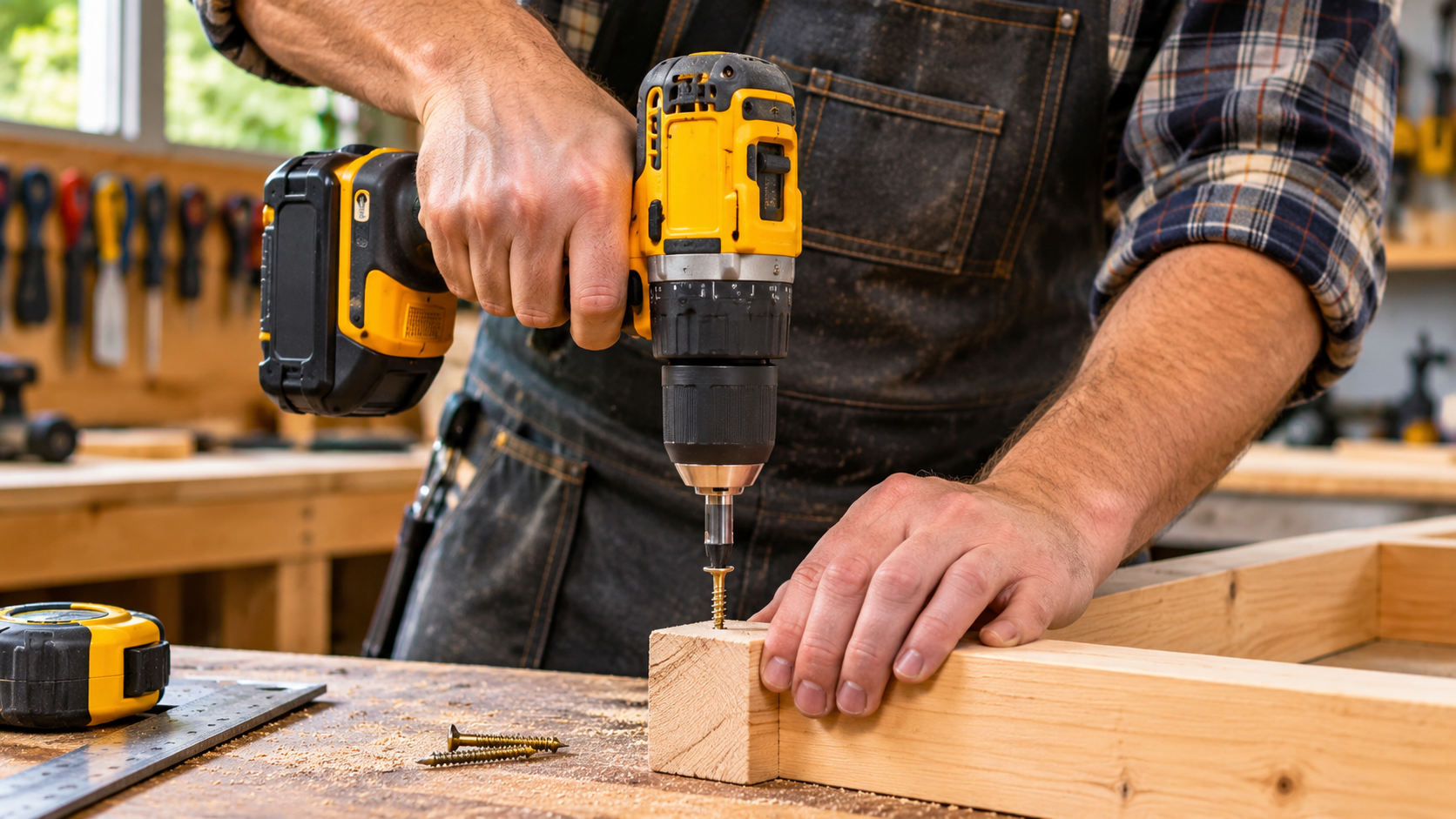
A reliable cordless drill is one of the most useful tools you can own. Whether you’re assembling furniture, fitting shelves, building a timber frame or tackling a home renovation, the right drill can save time and make everyday jobs easier.
However, choosing between Bosch, DeWalt, Makita, Milwaukee and Ryobi isn’t always straightforward. Different models offer different combinations of power, weight, battery compatibility and price.
In this guide, we’ll explain what matters when buying a cordless drill, compare popular options and help you choose a tool suited to your projects and budget.
What Should You Look for in a Cordless Drill?
Battery Voltage and Capacity
Most versatile cordless drills for DIY and professional work use an 18V battery system. Some manufacturers describe equivalent platforms as 20V Max, depending on the market.
Battery capacity is measured in amp-hours (Ah). A larger battery generally provides longer runtime, although it also adds weight.
For occasional household tasks, a 2.0Ah battery may be sufficient. For extended drilling or demanding work, a 4.0Ah or 5.0Ah battery can be more convenient.
Brushless Versus Brushed Motors
Brushless motors are generally more efficient and require less motor maintenance than traditional brushed designs.
They are particularly attractive if you use your drill frequently. However, a less expensive brushed drill may still be perfectly adequate for occasional DIY projects.
Torque and Speed Settings
Torque describes the rotational force available from the drill. Higher torque can be useful for driving larger screws and drilling larger holes.
Look for a drill with two mechanical gears and adjustable clutch settings. These provide better control when switching between delicate screwdriving and heavier drilling.
Remember that manufacturers do not always measure or advertise maximum torque in exactly the same way, so headline figures are not a complete performance comparison.
Drill Driver or Combi Drill?
A standard drill driver is designed primarily for drilling wood and metal and driving screws.
A combi drill adds a hammer action for occasional drilling into brick and similar masonry.
For regular drilling into concrete or hard masonry, an SDS-plus rotary hammer is usually a better choice.

Bosch Professional: A Strong All-Round Option
The Bosch Professional GSR 18V-55 is an example of a capable 18V drill driver for general workshop and installation work.
It features a brushless motor, a 13mm metal chuck, two gears and a manufacturer-rated hard torque figure of 55Nm.
Its compact design makes it attractive for furniture construction, cabinet installation and general drilling into timber or metal.
One important distinction is that the GSR 18V-55 is a drill driver, not a hammer-action combi drill. Buyers who regularly drill into masonry should consider a suitable Bosch combi model instead.
Best suited to: DIY enthusiasts and tradespeople who want a versatile drill driver for wood, metal and screwdriving.
DeWalt: A Practical Choice for Demanding Projects
DeWalt’s 18V XR range is popular with users who want a broad selection of cordless tools sharing a battery platform.
The DCD796 brushless hammer drill driver combines two-speed gearing, adjustable torque control and a hammer function.
It is suitable for a wide range of tasks, from fitting kitchen units to drilling into timber, metal and appropriate masonry.
Its hammer mode adds versatility, although it should not be treated as a replacement for a dedicated rotary hammer when tackling substantial concrete drilling.
Best suited to: Regular DIY users, installers and tradespeople who want a versatile combi drill within the DeWalt XR system.
Makita: A Versatile Workshop and Site Option
The Makita DHP484 is an 18V LXT brushless combi drill designed for drilling, screwdriving and hammer drilling.
It offers two mechanical gears, adjustable clutch settings and a 13mm keyless chuck.
Makita’s LXT battery platform is particularly useful for buyers who already own compatible tools and batteries.
The DHP484 is a sensible option for woodworking, general property maintenance and installation work.
Best suited to: Woodworkers, renovators and regular users looking for a brushless combi drill within the Makita LXT range.

Milwaukee: Worth Considering for Frequent Trade Use
Milwaukee’s M18 cordless range includes compact drill drivers and more powerful hammer drill models.
The brand is worth investigating if you work regularly on demanding installations or intend to build a larger collection of cordless tools.
However, Milwaukee models vary considerably in size, torque and features. Compare the exact model number rather than assuming every M18 drill offers the same performance.
Also consider the weight of the drill with its battery fitted. A powerful tool is not necessarily the most comfortable option for repetitive overhead work.
Best suited to: Frequent users and tradespeople who prioritise a broad professional cordless tool system.
Ryobi: A Practical Option for Home DIY
Ryobi’s ONE+ range is aimed at users who want a wide selection of cordless tools for home improvement, gardening and general maintenance.
The R18PD3 is an example of an 18V combi drill with two gears, adjustable torque settings and hammer action.
It offers the versatility needed for many everyday household jobs, including assembling furniture, installing shelves and carrying out light renovation work.
Ryobi is particularly worth considering if you want to use the same battery system across several DIY and garden tools.
Best suited to: Homeowners, beginners and occasional DIY users looking for a versatile cordless tool platform.
Cordless Drill Comparison at a Glance
| Brand and example model | Type | Main attraction |
|---|---|---|
| Bosch GSR 18V-55 | 18V brushless drill driver | Wood, metal and screwdriving |
| DeWalt DCD796 | 18V brushless combi drill | Versatility and hammer action |
| Makita DHP484 | 18V brushless combi drill | General drilling and LXT compatibility |
| Milwaukee M18 range | Model-dependent | Professional tool platform |
| Ryobi R18PD3 | 18V combi drill | Everyday DIY and ONE+ compatibility |
These are representative examples rather than results from a controlled hands-on test. Always check the exact model, included accessories and battery package before purchasing.
Should You Buy a Bare Tool or a Complete Kit?
A bare tool normally comes without a battery or charger.
This can be a cost-effective purchase if you already own compatible batteries from the same manufacturer and platform.
For first-time buyers, a kit containing a drill, battery, charger and case may offer better overall value.
Pay particular attention to the battery capacity. Two kits with similar-looking drills may have substantially different battery packages.

Which Cordless Drill Is Best for Your Projects?
For occasional home DIY, prioritise ease of use, manageable weight and value rather than the highest possible torque.
For woodworking and furniture making, a drill with a controllable clutch, good balance and accurate chuck is particularly useful.
For regular renovation projects, a brushless combi drill offers versatility across a wider range of tasks.
For professional work, consider the complete battery platform, replacement battery costs, warranty terms and local service availability.
For more practical advice on choosing tools and planning projects, explore our Tools & Equipment guides at Rivet & Rule.
Common Mistakes to Avoid When Buying a Cordless Drill
One common mistake is choosing a drill based only on its advertised power.
An unnecessarily heavy drill can become uncomfortable during long jobs, while an expensive professional model may be excessive for occasional household tasks.
Another mistake is overlooking battery compatibility. Batteries are generally not interchangeable between competing manufacturers, and even one manufacturer’s different battery platforms may not be compatible.
Finally, avoid using hammer mode indiscriminately. Choose the correct drilling mode and bit for the material, check for hidden pipes and cables, and follow the manufacturer’s safety instructions.
Final Thoughts: Choose the Right Drill, Not Just the Biggest Brand
Final Thoughts: Choose the Right Drill, Not Just the Biggest Brand
There is no single cordless drill that is best for everyone.
Bosch, DeWalt, Makita, Milwaukee and Ryobi each offer options suited to different types of work. The best purchase is the one that provides the features you genuinely need, feels comfortable to use and fits your existing or planned battery system.
For most homeowners, a well-balanced 18V drill with two gears, adjustable torque settings and a suitable battery will handle a wide range of everyday projects.
Before buying, compare the exact model specifications, kit contents and current prices rather than relying on brand reputation alone.
Building your woodworking toolkit? Our guide to selecting your first table saw explains what to consider when choosing another essential workshop tool.