
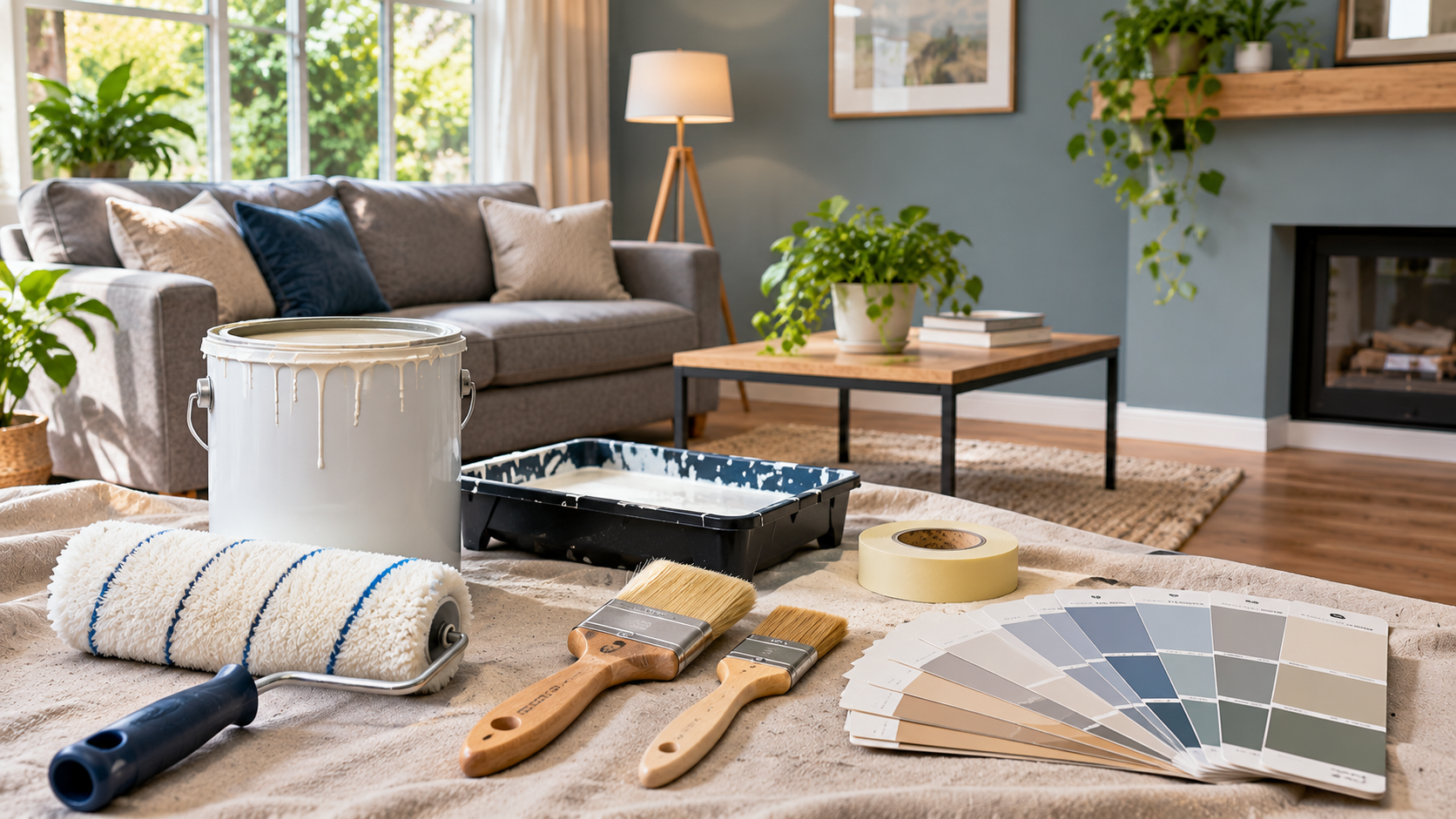
Choosing the best paint for interior walls involves more than finding an attractive colour. The right paint can transform a room, protect its surfaces and make cleaning easier. Many paint types, finishes and formulations are available. Understanding their differences will help you choose the right product before starting your decorating project.
Your choice of paint should reflect how you use each room. A bedroom, living room, kitchen and bathroom may all need different products. Consider durability, washability, moisture resistance, coverage and surface preparation before making your decision. Paint that works beautifully in a quiet bedroom may not suit a busy hallway or family kitchen.
This complete buying guide explains the different types of interior wall paint and compares popular finishes. We’ll examine matt, eggshell, satin and silk paints and explain which rooms suit each option. You’ll also learn about paint quality, coverage, preparation, costs and common buying mistakes. Our practical advice will help you make an informed decision and achieve a professional-looking finish.
Understanding the Different Types of Interior Wall Paint
Interior wall paints are available in several formulations. Each offers particular benefits in appearance, durability, application and maintenance. Although many modern products are water-based, differences in their ingredients and intended uses can significantly affect performance.
Understanding these differences will help you select a paint that suits both the surface you’re decorating and the conditions within the room. The most common options include water-based emulsion, acrylic and latex paints, specialist washable formulations and moisture-resistant products designed for kitchens and bathrooms.
Water-Based Emulsion Paint
Water-based emulsion is one of the most popular choices for interior walls and ceilings. It dries relatively quickly, produces less odour than many solvent-based paints and is easy to apply. Most products also allow you to clean brushes and rollers with water.
Emulsion paints come in several finishes, including matt, silk and soft sheen. Standard matt emulsion suits many living rooms and bedrooms. For busy areas, consider a durable or washable formulation that can withstand regular cleaning. Always check the manufacturer’s recommendations before choosing a product.
Acrylic and Latex Paint
Acrylic and latex paints are common choices for interior decorating. Both generally use water-based formulations, although their exact ingredients vary between manufacturers. They offer good adhesion, flexibility and colour retention. Many products also resist cracking and peeling when you prepare the surface correctly.
Acrylic-rich formulations often provide strong durability and resistance to everyday wear. This makes them useful in busy rooms and areas that need regular cleaning. However, product performance varies, so check the manufacturer’s guidance on washability, coverage and suitable surfaces. Choose a paint that matches the demands of your room rather than relying on its name alone.
Washable and Scrubbable Paint
Washable and scrubbable paints help protect interior walls against everyday marks and stains. They are particularly useful in hallways, kitchens, children’s bedrooms and other busy areas. Many products allow you to remove dirt with a damp cloth without damaging the finish. However, the level of cleaning resistance varies between paints, so always check the manufacturer’s specifications.
Look for independent durability ratings when comparing washable paints. The EN 13300 standard classifies wet scrub resistance from Class 1 to Class 5. Class 1 offers the highest resistance to repeated scrubbing under the test conditions. For walls that need frequent cleaning, a durable matt or specialist washable paint may provide better long-term value than standard emulsion.
Kitchen and Bathroom Paint
Kitchens and bathrooms place different demands on interior wall paint. Steam, condensation, humidity and frequent cleaning can affect the finish over time. Specialist kitchen and bathroom paints offer additional protection against these conditions. Many formulations also resist staining and make surfaces easier to clean. However, good ventilation and proper surface preparation remain essential.
Choose paint that suits the conditions in each room. For kitchens, look for washable finishes that resist everyday splashes and grease. Bathrooms benefit from moisture-resistant products, especially where condensation occurs regularly. Some specialist paints also contain additives that help inhibit mould growth on the paint film. Always follow the manufacturer’s instructions and address any underlying damp problems before decorating.
Understanding Interior Paint Finishes: Matt, Eggshell, Satin and Silk
The finish you choose affects how your interior walls look and perform. Some finishes create a soft, understated appearance, while others reflect more light. Paint finishes also differ in durability, washability and their ability to disguise surface imperfections. Understanding these differences will help you choose the right finish for each room.
Matt, eggshell, satin, silk and soft sheen are common interior paint finishes. Each offers a different balance of appearance, light reflection and practicality. Matt paint helps disguise minor wall imperfections, while higher-sheen finishes often make cleaning easier. However, durability also depends on the paint formulation. Always consider how you use the room before selecting a finish.

Matt Paint
Matt paint creates a smooth, understated finish with very little light reflection. It works particularly well in living rooms, bedrooms and other spaces where you want a soft appearance. The low sheen also helps disguise minor imperfections in plaster and previously painted walls. This makes matt paint a popular choice for large interior surfaces.
Standard matt emulsion may show marks more easily than some higher-sheen finishes. It can also be harder to clean without affecting the painted surface. For busy rooms, consider a durable matt formulation with improved washability. These products combine a low-sheen appearance with greater resistance to everyday wear. Check the manufacturer’s cleaning and durability ratings before buying.
Eggshell Paint
Eggshell paint provides a subtle sheen that sits between matt and higher-gloss finishes. It reflects a little more light than matt paint without creating a noticeably shiny surface. This makes it a useful choice for rooms that need a balance of appearance and practicality. The finish can also give interior walls a smooth, elegant look.
Eggshell finishes can work well in living rooms, dining rooms and other areas that need occasional cleaning. Some formulations offer greater durability than standard matt emulsion. However, manufacturers also produce eggshell paints for woodwork rather than walls. Check that your chosen product suits interior wall surfaces. Always compare its washability and durability ratings before buying.
Satin Paint
Satin paint creates a smooth finish with a noticeable but moderate sheen. It reflects more light than matt or eggshell paint, giving surfaces a brighter appearance. The finish can work well in contemporary interiors where you want a clean, polished look. However, its reflective surface may highlight bumps, cracks and other wall imperfections.
Many satin paints offer good durability and allow easier cleaning than standard matt emulsion. This can make suitable wall formulations useful in busy rooms and areas that need regular maintenance. However, manufacturers often design satin products for doors, skirting boards and other woodwork. Check that the paint is suitable for interior walls before buying. Prepare the surface carefully to achieve an even finish.
Silk Paint
Silk paint creates a smooth, reflective finish that gives interior walls a noticeable sheen. It reflects more light than matt emulsion and can make rooms appear brighter. This makes silk paint a useful option for spaces where you want a slightly polished appearance. However, its reflective surface can highlight uneven plaster, cracks and other wall imperfections.
Silk emulsion often provides better resistance to everyday marks than standard matt paint. Many products also allow you to wipe away light dirt with a damp cloth. This can make silk paint suitable for hallways, kitchens and other busy areas. However, washability varies between manufacturers and formulations. Check the product’s cleaning instructions and durability ratings before making your choice.
Soft Sheen Paint
Soft sheen paint offers a finish between matt and more reflective options such as silk. It creates a gentle sheen without making walls look excessively shiny. This makes it a useful choice for living rooms, bedrooms and other spaces where you want a subtle finish. The slight reflection can also help brighten a room while maintaining a relatively understated appearance.
Many soft sheen paints offer greater washability than standard matt emulsion. This can make them suitable for family rooms, hallways and other areas that need occasional cleaning. However, durability varies between products, and some finishes may highlight minor surface imperfections. Compare the manufacturer’s cleaning recommendations and wet scrub resistance ratings before buying. Choose a formulation that suits both the room and your preferred appearance.
Choosing the Best Interior Wall Paint for Every Room
Different rooms place different demands on interior wall paint. While appearance and colour are important throughout the home, practical considerations such as moisture, cleaning requirements, natural lighting and everyday wear should also influence your choice. Selecting the appropriate paint for each space can improve durability, simplify maintenance and help maintain an attractive finish for longer.
A quiet bedroom may benefit from a traditional matt emulsion, while a busy hallway or family kitchen often requires a more durable, washable formulation. Bathrooms introduce additional considerations because of condensation and humidity. The following room-by-room recommendations explain which paint types and finishes are generally most suitable and what to consider before buying.
Best Paint for Living Rooms
Living rooms generally benefit from interior wall paints that combine an attractive appearance with reasonable durability. Matt and durable matt emulsions are popular choices because they create a soft, contemporary finish and help disguise minor imperfections in plasterwork. Eggshell and soft sheen finishes can also work well when a slightly more reflective appearance is preferred, provided the product is suitable for walls.
In family living rooms, washable paint is particularly useful for dealing with fingerprints, occasional spills and everyday marks. Consider how natural and artificial light affects the appearance of different finishes, especially on large walls. Testing sample colours at different times of day can help avoid disappointing results, while choosing a quality formulation with good coverage and colour consistency can make future maintenance easier.
Best Paint for Bedrooms
Bedrooms generally experience less wear than kitchens, hallways and other busy areas, making matt and durable matt emulsions excellent choices for many decorating projects. Their low-sheen appearance creates a calm, comfortable atmosphere and helps conceal minor surface imperfections. Soft sheen or eggshell wall paints can also be suitable when a slightly more reflective finish is preferred.
For children’s bedrooms, washable and stain-resistant formulations are worth considering because walls may need more frequent cleaning. Low-odour, low-VOC paints can also be appealing, although ventilation remains important during application and drying. Always follow the manufacturer’s instructions regarding drying, curing and when a freshly decorated room can be occupied.
Best Paint for Kitchens
Kitchen walls are exposed to cooking vapours, occasional grease splashes, condensation and frequent cleaning, so durability and stain resistance should be priorities. A high-quality washable wall paint, such as a specialist kitchen formulation or durable matt emulsion, can provide a practical balance between appearance and maintenance. Satin, silk and other washable finishes may also be suitable, depending on the manufacturer’s recommendations.
Before painting, thoroughly remove grease and cooking residues, repair damaged surfaces and use an appropriate primer where required. Good ventilation helps control condensation and supports the long-term performance of the finish. Behind sinks, hobs and other areas exposed to frequent splashing or heat, a suitable splashback or protective surface may be more appropriate than ordinary decorative paint. Always check the product’s cleaning instructions and resistance specifications before buying.
Best Paint for Bathrooms
Bathrooms present particular challenges for interior wall paint because of high humidity, condensation and frequent temperature changes. A specialist bathroom paint designed to resist moisture and inhibit mould growth is often a practical choice for walls and ceilings outside direct wet areas. Many modern bathroom paints are available in durable matt, soft sheen and other finishes, allowing homeowners to balance appearance with everyday performance.
Before decorating, ensure that surfaces are clean, dry and free from existing mould or damaged coatings. Address any leaks or ventilation problems and use suitable primers where recommended. Even moisture-resistant paint cannot prevent mould caused by persistent condensation or damp conditions. In shower enclosures and other areas exposed to direct water, use an appropriate waterproof wall system rather than relying on ordinary decorative paint.
Best Paint for Hallways and Staircases
Hallways, landings and staircases are among the busiest areas of a home, making durability and ease of cleaning especially important. Walls in these spaces are frequently exposed to scuffs from shoes, bags, furniture and everyday movement. A high-quality washable or scrubbable paint, particularly a durable matt formulation, can provide an attractive finish while offering improved resistance to regular wear.
Eggshell, satin and soft sheen wall paints may also be suitable where a more reflective appearance is preferred. However, higher-sheen finishes can make surface imperfections more noticeable, particularly along staircases where light falls across large wall areas. For households with children or pets, consider products with strong stain resistance and independently tested wet-scrub performance. Proper preparation and allowing the paint to cure fully will help achieve a longer-lasting finish.
Best Paint for Dining Rooms
Dining rooms offer considerable flexibility when choosing interior wall paint, as the most suitable finish depends on how frequently the space is used. Matt and durable matt paints create an elegant, understated appearance that works particularly well with contemporary and traditional interiors. Eggshell and soft sheen finishes can also provide an attractive alternative when a subtle reflective effect is desired.
In households where the dining room is used regularly for family meals, washable paint can make cleaning occasional food splashes and marks easier. Consider the room’s lighting, furniture and decorative features when selecting colours, as warm and cool tones can appear noticeably different under artificial lighting. Testing paint samples on several walls before committing to a colour will help achieve a balanced and welcoming result.
Best Paint for Home Offices
Home offices benefit from wall paints that create a comfortable working environment while minimising distracting reflections. Matt and durable matt finishes are often good choices because they provide a soft appearance and reduce glare from windows, desk lamps and other light sources. Neutral colours, muted greens and soft blues are popular decorative options, although personal preference and the room’s lighting should guide the final decision.
Where the office also serves as a guest bedroom or family space, a washable formulation can provide additional practicality. Consider how the wall colour appears during video calls and under artificial lighting, particularly if the room is used throughout the day. Good surface preparation and a quality paint with consistent coverage will help create a professional-looking finish that remains attractive with regular use.
How to Choose Quality Interior Wall Paint
Not all interior wall paints offer the same level of performance, even when they appear similar on the shelf. Differences in formulation, pigment quality, coverage, durability and application characteristics can affect both the finished appearance and the long-term value of a decorating project. Understanding these factors can help you choose a suitable product rather than relying on price or brand recognition alone.
A quality interior paint should provide consistent colour, satisfactory coverage and a finish appropriate for the room’s intended use. It should also be reasonably straightforward to apply when the surface is properly prepared. Comparing technical specifications, manufacturer guidance and independent performance ratings can provide a more reliable indication of quality than marketing descriptions alone.
Coverage and Opacity
Coverage describes the area that a given quantity of paint can cover, usually expressed in square metres per litre or square feet per gallon. Opacity refers to how effectively the paint hides the colour or surface beneath it. These characteristics are related but different. A paint may cover a large area yet still require additional coats to achieve a uniform finish. The manufacturer’s stated coverage is normally an estimate and can vary according to surface texture, porosity and application method.
Higher-opacity paints can reduce the amount of work required when covering existing colours, particularly where there is a significant colour change. However, even premium paints may need two or more coats for the best result. When comparing products, consider the recommended number of coats alongside the stated spreading rate. The most economical choice is not necessarily the paint with the lowest price per litre, but the one that delivers the required finish with a reasonable amount of material and labour.
Durability and Washability
Durability is an important consideration when choosing interior wall paint, particularly for rooms exposed to regular contact, cleaning and everyday wear. A durable paint should resist premature marking, scuffing and deterioration when used in the conditions for which it was designed. Washability describes how effectively the painted surface withstands cleaning, although the level of resistance can vary considerably between products.
When comparing washable paints, look for recognised performance standards rather than relying solely on marketing claims. Under the European EN 13300 classification system, wet-scrub resistance is divided into five classes, with Class 1 offering the highest resistance. However, wet-scrub resistance does not necessarily indicate how easily individual stains can be removed. Consider both cleaning performance and the manufacturer’s recommended maintenance procedures, especially for kitchens, hallways and children’s rooms.
Colour Retention and Finish Consistency
Colour retention refers to how well a paint maintains its original appearance over time. Interior paints may experience changes in colour or sheen because of sunlight, cleaning, surface conditions and normal ageing. Quality formulations are designed to provide consistent colour and minimise unwanted changes when applied and maintained according to the manufacturer’s instructions.
Finish consistency is equally important, particularly on large walls where variations in sheen, roller marks or uneven coverage can become noticeable. Proper surface preparation, thorough mixing and maintaining a wet edge during application can help achieve a uniform result. When purchasing multiple containers of the same colour, check the manufacturer’s guidance on batch consistency and consider combining paint from different containers where recommended to reduce the risk of visible colour variation.
VOC Levels and Indoor Air Quality
Volatile organic compounds (VOCs) are chemicals that can be released into the air from certain paints and other decorating materials. Some VOCs can contribute to indoor air pollution and may cause irritation or other health concerns, depending on the substances involved and the level and duration of exposure. Many modern water-based interior paints are available in low-VOC formulations, making them worth considering for bedrooms, living rooms and other regularly occupied spaces.
When comparing products, check the manufacturer’s VOC information and any recognised environmental or emissions certifications. A low-VOC label does not necessarily mean that a paint is completely free from emissions or odour, and water-based paints can still contain substances that require careful handling. Always follow the product’s safety instructions, maintain adequate ventilation during application and drying, and observe the recommended period before returning a room to normal use.
Drying and Curing Times
Drying time describes how long paint takes to become touch-dry or ready for another coat, while curing time refers to the longer process during which the coating develops its intended properties. Many water-based interior paints become touch-dry within a few hours, but the actual timing depends on the formulation, temperature, humidity, ventilation and thickness of application. The manufacturer’s recommended recoating interval should always take priority over general estimates.
A painted wall may feel dry long before it has developed its full resistance to cleaning, scuffing and everyday wear. Some coatings require several days or longer to cure sufficiently for more demanding use. Avoid aggressive cleaning, unnecessary contact or replacing items against freshly painted surfaces until the manufacturer advises it is safe. Understanding the difference between drying and curing can help prevent damage and improve the long-term appearance of the finished room.
How Much Paint Do You Need? Calculating Coverage and Quantity
Estimating the correct quantity of paint before starting a decorating project can help reduce unnecessary costs, minimise waste and avoid interruptions during application. Buying too little paint may result in delays or noticeable differences between batches, while purchasing significantly more than required can leave expensive materials unused.
The amount of paint needed depends on the total wall area, the manufacturer’s stated coverage rate, the number of coats required and the condition of the surface. Rough or porous walls generally absorb more paint than smooth, previously painted surfaces. By measuring the room carefully and allowing for these factors, you can produce a practical estimate before purchasing your materials.
How to Calculate Wall Area
To calculate the wall area of a rectangular room, measure its length, width and wall height. Add the length and width together, multiply by two to find the room’s perimeter, and then multiply the perimeter by the wall height. This gives the approximate total wall surface area in square metres. For irregularly shaped rooms, measure each wall separately and add the individual areas together.
You can then subtract the areas of doors, windows and other surfaces that will not be painted. However, allowing a small margin for cutting in, application losses and future touch-ups is sensible. For walls with substantial texture or highly absorbent surfaces, additional paint may be required. Always compare your measurements with the manufacturer’s stated coverage before deciding how many containers to buy.
Example: Calculating the Wall Area of a Room
Consider a rectangular bedroom measuring 4 metres long, 3 metres wide and 2.5 metres high. First, calculate the perimeter by adding the length and width together and multiplying by two: (4 + 3) × 2 = 14 metres. Next, multiply the perimeter by the wall height: 14 × 2.5 = 35 square metres. This is the total wall area before deducting any doors or windows.
Suppose the room has one door measuring 2 metres by 0.8 metres and one window measuring 1.5 metres by 1.2 metres. The door occupies 1.6 square metres, while the window occupies 1.8 square metres. Subtracting these areas from the original 35 square metres gives a net paintable wall area of 31.6 square metres. This figure provides the starting point for calculating how much paint is required.
How to Calculate the Litres of Paint Required
Once you know the paintable wall area, divide it by the manufacturer’s stated coverage rate to estimate the amount of paint needed for one coat. Then multiply the result by the number of coats required. For example, if the bedroom in our previous calculation has a paintable wall area of 31.6 square metres and the chosen paint covers 12 square metres per litre per coat, two coats would require approximately 5.27 litres of paint.
It is sensible to allow a modest additional quantity for application losses, surface variations and touch-ups. Adding approximately 10% to this example gives an estimated requirement of 5.8 litres. Depending on the available container sizes, purchasing sufficient paint to meet or slightly exceed this estimate will help avoid running short. Always check the product’s actual coverage rate and preparation requirements, as porous surfaces, significant colour changes and additional coats can increase the quantity needed.
Paint Quantity & Cost Calculator
Enter your room measurements and paint details to estimate how much paint you need and what it will cost.
1. Room measurements
2. Paint details
Your estimated results
Estimates assume a rectangular room. Enter the combined area of all doors and windows. Results include the selected extra allowance but exclude primer, equipment and labour. Actual paint requirements depend on surface conditions and product instructions.
Understanding Interior Paint Costs and Value for Money
Interior wall paint is available across a wide range of price points, from budget-friendly emulsions to premium designer and specialist coatings. Although price can sometimes reflect differences in formulation, pigment quality, durability and finish, a more expensive product is not automatically the best choice for every decorating project. The most suitable paint is one that delivers the required performance at a reasonable overall cost.
When comparing prices, consider more than the amount printed on the container. Coverage rates, the number of coats required, surface preparation, application time and expected durability can all influence the final cost. A relatively inexpensive paint that needs several additional coats may ultimately cost more than a higher-quality alternative that provides satisfactory coverage with less material and labour.
Comparing Paint Prices Per Litre
Comparing the price per litre is a useful starting point when evaluating interior wall paints sold in different container sizes. To calculate this figure, divide the total purchase price by the number of litres in the container. For example, a 5-litre container costing £40 has a price of £8 per litre, while a 2.5-litre container costing £25 works out at £10 per litre. Using a consistent unit makes it easier to compare products without being distracted by packaging sizes.
However, the lowest price per litre does not necessarily represent the best value. A paint with a higher coverage rate or better opacity may require less material to achieve the desired result. Similarly, a more durable formulation may reduce the frequency of future repainting. For a meaningful comparison, consider the cost of covering the required wall area with the recommended number of coats, rather than relying exclusively on the initial purchase price.
Calculating the Cost Per Square Metre
Calculating the cost per square metre provides a more meaningful comparison between interior wall paints than looking at container prices alone. To estimate the material cost of painting one square metre, divide the price per litre by the manufacturer’s stated coverage rate and multiply by the number of coats required. For example, a paint costing £8 per litre with a coverage rate of 12 square metres per litre would cost approximately £1.33 per square metre when applied in two coats.
This calculation can help identify whether a higher-priced paint offers better overall value through improved coverage or fewer required coats. However, the result is only an estimate and does not include additional materials, preparation work or labour. Actual costs can increase when surfaces are porous, uneven or require extra coats. When comparing products, use realistic coverage figures and the manufacturer’s recommended application system to obtain the most useful estimate.
Budget Paint vs Premium Paint: Which Offers Better Value?
Budget interior paints can be suitable for many decorating projects, particularly in rooms with relatively low levels of wear or where keeping initial costs down is a priority. However, some lower-priced formulations may offer reduced opacity, lower scrub resistance or less consistent coverage than higher-performance alternatives. These differences can affect the number of coats required and how well the finished surface withstands everyday use.
Premium paints may offer advantages such as improved hiding power, specialised finishes, greater washability or a wider choice of colours. Nevertheless, a higher price does not guarantee better performance in every situation. Compare the technical specifications and intended applications of individual products rather than assuming that one price category is always superior. For frequently used rooms, investing in a durable, washable paint may provide better long-term value, while a reasonably priced standard emulsion may be entirely adequate for a low-traffic bedroom or ceiling.
Preparing Interior Walls Before Painting
Proper surface preparation is one of the most important factors in achieving a smooth, durable and professional-looking paint finish. Even the best interior wall paint may struggle to adhere correctly or provide consistent coverage if the underlying surface is dirty, damaged, damp or unstable. Taking time to prepare walls thoroughly can improve adhesion, reduce visible imperfections and help the finished coating perform as intended.
Before opening a paint container, inspect the walls for cracks, holes, loose paint, stains and signs of moisture. Different surfaces may require different preparation methods, particularly when dealing with newly plastered walls, previously painted surfaces or areas affected by condensation. Following the paint manufacturer’s preparation instructions will help avoid common problems such as peeling, patchy coverage and uneven absorption.

Cleaning and Repairing Wall Surfaces
Start by removing dust, cobwebs and loose surface material using a soft brush or vacuum cleaner. Walls affected by grease, fingerprints or other contamination may require cleaning with a suitable decorating cleaner, following the manufacturer’s instructions. Rinse where necessary and allow the surface to dry completely before proceeding. Any underlying dampness, leaks or persistent mould problems should be investigated and resolved rather than simply covered with paint.
Small cracks and holes can usually be repaired with an appropriate interior filler. Once the filler has dried, sand the repaired areas smooth and remove any remaining dust. Loose or flaking paint should be carefully removed, while sound existing coatings may benefit from light abrasion to improve adhesion. Take suitable precautions when disturbing old paint, particularly in older properties where hazardous coatings may be present. A clean, dry and stable surface provides the best foundation for subsequent priming and painting.
When to Use Primers and Sealers
Primers and sealers help prepare wall surfaces for painting by improving adhesion, controlling absorption and addressing certain surface problems. A suitable primer may be required when painting bare plaster, repaired areas, previously unpainted surfaces or existing coatings that are difficult to paint over. Specialist stain-blocking primers can also help prevent marks caused by water damage, nicotine or other contaminants from showing through the new finish, provided the underlying cause has been resolved.
Not every wall requires a separate primer, particularly when an existing paint finish is sound, clean and compatible with the new coating. However, skipping a recommended primer can lead to uneven coverage, poor adhesion or premature paint failure. Always check the manufacturer’s instructions to determine whether a primer, sealer or particular preparation system is necessary. Choosing products designed to work together will help achieve a consistent and durable finish.
Preparing Newly Plastered Walls for Painting
Newly plastered walls require particular attention because fresh plaster contains moisture and can be highly absorbent. Painting before the plaster has dried sufficiently may trap moisture and contribute to problems such as blistering, peeling or uneven coverage. Drying times vary according to plaster thickness, temperature, humidity and ventilation, so the surface should be allowed to dry thoroughly before decorating. Follow the plaster manufacturer’s guidance rather than relying on a fixed number of days.
Once the plaster is dry, prepare it using a primer or mist coat suitable for the chosen paint system. Some manufacturers recommend a diluted first coat of compatible water-based emulsion, while others specify a dedicated plaster primer. Do not assume that every paint can be diluted or that the same preparation method is suitable for all plaster products. Follow the manufacturer’s recommended dilution ratios, application instructions and drying intervals before applying the finishing coats.
Choosing the Right Tools for Painting Interior Walls
Using suitable painting tools can make a significant difference to the quality of the finished surface and the time required to complete a decorating project. Essential equipment typically includes a quality paint roller, roller frame, extension pole, suitable brushes, paint tray or bucket, dust sheets and masking tape. The most appropriate tools depend on the type of paint, the texture of the walls and the size of the area being decorated.
Investing in well-made brushes and rollers can help achieve more even coverage, reduce unwanted brush marks and minimise loose fibres in the paint finish. Roller sleeves are available in different materials and pile lengths, with shorter piles generally suited to smooth surfaces and longer piles used for more textured walls. Always check the paint manufacturer’s recommendations, as some specialist coatings require particular application equipment or techniques.
How to Apply Interior Wall Paint for a Smooth Finish
Begin by protecting floors, furniture and fittings before thoroughly mixing the paint according to the manufacturer’s instructions. Use a suitable brush to cut in carefully around ceilings, corners, skirting boards and other edges. Work systematically across the wall, applying paint with a roller in manageable sections. Distribute the paint evenly without overloading the roller, and maintain a wet edge wherever possible to reduce visible overlaps and lap marks.
Avoid repeatedly rolling over areas that have already started to dry, as this can disturb the developing finish and create unwanted texture. Allow each coat to dry for the recommended period before applying the next, and use consistent application techniques throughout the room. Good lighting can help reveal missed areas, uneven coverage and surface imperfections while decorating. Once painting is complete, follow the manufacturer’s guidance on ventilation, curing and cleaning before returning the room to normal use.
Common Interior Painting Mistakes and How to Avoid Them
Even when using high-quality interior wall paint, simple mistakes during preparation and application can lead to disappointing results. Problems such as uneven coverage, visible roller marks, peeling paint and inconsistent colour are often associated with unsuitable surface preparation, incorrect application techniques or failure to follow the manufacturer’s instructions. Understanding these common issues can help prevent unnecessary work and additional decorating costs.
Many painting problems can be avoided by allowing sufficient time for preparation, choosing products suitable for the surface and working under appropriate conditions. Rushing between coats, using unsuitable tools or applying paint to damp or contaminated walls can compromise the finished result. Taking a methodical approach and following the recommended application process will help achieve a more consistent and durable finish.
Applying Paint Without Proper Surface Preparation
One of the most common decorating mistakes is applying new paint directly over dirty, damaged or unstable surfaces. Dust, grease, loose coatings and untreated stains can interfere with adhesion and create visible imperfections in the finished wall. Painting over cracks or holes without repairing them may also make existing defects more noticeable, particularly when using finishes that reflect more light.
Before painting, clean the surface thoroughly, repair damaged areas and remove loose or flaking material. Allow the walls to dry completely and apply an appropriate primer where recommended. Particular care is needed with newly plastered walls and surfaces affected by dampness, as these may require additional preparation or treatment. Spending time preparing the surface correctly can help prevent peeling, patchy coverage and premature paint failure.
Not Allowing Enough Drying Time Between Coats
Applying a second coat before the previous layer has dried sufficiently is a common decorating mistake that can affect the appearance and durability of interior wall paint. Recoating too soon may disturb the underlying film, cause uneven coverage or contribute to problems such as lifting, streaking and poor adhesion. Although some water-based paints become touch-dry relatively quickly, this does not necessarily mean they are ready for another coat.
Always follow the manufacturer’s recommended recoating interval, taking account of temperature, humidity and ventilation. Cooler or more humid conditions can extend drying times, while thicker applications may also require additional time. Avoid attempting to accelerate drying with excessive heat, as this can create uneven conditions and potentially affect the finish. Allowing each coat to dry properly will help produce a smoother and more consistent result.
Choosing the Wrong Paint Finish for the Room
Selecting an unsuitable paint finish can lead to unnecessary maintenance, disappointing appearance or reduced durability. For example, a standard matt emulsion may not provide sufficient cleaning resistance for a busy hallway, while a highly reflective finish can make surface imperfections more noticeable on uneven walls. Kitchens and bathrooms may also require specialist formulations designed to withstand moisture, condensation and regular cleaning.
Before purchasing paint, consider how the room will be used, how frequently the walls will need cleaning and the level of sheen you prefer. Durable matt finishes can offer a useful balance between appearance and practicality in busy living spaces, while eggshell, satin and other finishes may suit particular decorative requirements. Always check the product’s intended application and performance specifications rather than selecting a finish based on appearance alone.
Applying Too Much Paint or Overloading the Roller
Applying excessive amounts of paint in a single coat can create problems such as runs, drips, uneven texture and extended drying times. Overloading a roller may also cause paint to accumulate along its edges, leaving visible ridges or uneven patches on the wall. Although applying a thicker coat might seem like a way to improve coverage, it can actually make achieving a smooth and consistent finish more difficult.
For better results, load the roller evenly and remove excess paint using a suitable roller tray or grid before applying it to the wall. Work in manageable sections, distributing the paint consistently without pressing excessively hard. Follow the manufacturer’s recommended spreading rate and avoid trying to achieve full coverage with one unnecessarily heavy coat. Applying the recommended number of properly distributed coats will generally produce a more reliable finish.
Painting in Unsuitable Temperature or Humidity Conditions
Temperature and humidity can significantly affect how interior wall paint applies, dries and develops its final properties. Painting in very cold or damp conditions may slow drying and interfere with proper film formation, while excessive heat or strong airflow can cause paint to dry too quickly. These conditions can contribute to visible lap marks, uneven sheen and other surface imperfections.
Before decorating, check the manufacturer’s recommended application temperature and humidity range. Ensure the room has suitable ventilation without directing strong airflow onto freshly painted surfaces. Avoid painting walls affected by condensation or moisture, and allow surfaces to reach an appropriate condition before starting. Maintaining reasonably stable environmental conditions during application and drying will help achieve a more uniform and durable finish.
Interior Wall Paint Comparison: Types, Finishes and Best Uses
Choosing the right interior wall paint becomes easier when the main types and finishes are compared side by side. Different formulations offer varying levels of sheen, durability, washability and moisture resistance, making some products better suited to particular rooms and decorating requirements than others.
The following comparison provides a general guide to commonly available interior wall paint options. Individual products can differ significantly in performance, so always check the manufacturer’s specifications before purchasing. In particular, durability and cleaning resistance should be assessed using the product’s stated performance rather than relying on the finish name alone.
| Paint Type / Finish | Appearance | Best Uses | Key Considerations |
| Standard Matt Emulsion | Flat, low sheen | Bedrooms, living rooms, ceilings | May have limited washability |
| Durable Matt | Low sheen | Hallways, family rooms, busy areas | Check scrub-resistance rating |
| Eggshell | Subtle sheen | Living rooms, dining rooms, feature walls | Sheen varies between brands |
| Satin | Noticeable soft sheen | Selected feature walls and decorative areas | Can highlight surface imperfections |
| Silk | Smooth, reflective sheen | Walls where a more reflective finish is preferred | May emphasise uneven surfaces |
| Kitchen Paint | Varies by product | Kitchens and cooking areas | Check grease and cleaning resistance |
| Bathroom Paint | Varies by product | Bathrooms and moisture-prone rooms | Not a substitute for waterproofing |
Frequently Asked Questions About Interior Wall Paint
Choosing the best paint for interior walls often raises questions about durability, finishes, coverage and maintenance. Understanding the differences between paint products can help homeowners and decorators make more informed purchasing decisions and avoid unnecessary expense.
The following frequently asked questions address some of the most common concerns when selecting and applying interior wall paint. The answers provide general guidance, although individual product specifications and manufacturer recommendations should always be checked before starting a decorating project.
What Is the Best Type of Paint for Interior Walls?
For most interior walls, a good-quality water-based emulsion or acrylic wall paint provides a practical combination of coverage, ease of application and everyday durability. Matt finishes are popular for living rooms and bedrooms because they create a soft appearance and help disguise minor surface imperfections. However, the most suitable product depends on the room’s intended use, the condition of the walls and the level of cleaning resistance required.
In busy households, washable or durable matt paints may offer better long-term value, particularly in hallways, staircases and family living areas. Kitchens and bathrooms may benefit from specialist formulations designed for their particular conditions. Rather than choosing paint solely by brand or price, compare coverage, durability, finish and manufacturer specifications to identify the most appropriate option for your project.
Is Matt or Silk Paint Better for Interior Walls?
Matt and silk paints offer different appearances, and neither is automatically the best choice for every interior wall. Matt paint has a low-sheen finish that helps disguise minor surface imperfections and creates a softer appearance. Silk paint reflects more light, producing a smoother-looking, more noticeable sheen that can make uneven surfaces and application marks more visible.
For living rooms and bedrooms, matt paint is often preferred because of its understated finish. Silk paint may appeal to homeowners who want a more reflective appearance, although its suitability depends on the condition of the walls and the specific product. If cleaning resistance is a priority, compare washable matt and silk formulations using their stated durability ratings rather than assuming that a shinier finish is always easier to maintain.
How Many Coats of Paint Do Interior Walls Need?
Most interior wall painting projects require two coats of finishing paint to achieve consistent colour and coverage, although the exact number depends on the product, surface condition and existing wall colour. Painting a light colour over a much darker shade, covering a highly absorbent surface or using a paint with lower opacity may require additional coats. Some specialist products are formulated for enhanced one-coat coverage, but their performance will depend on the application conditions and the manufacturer’s instructions.
Applying an appropriate primer or sealer can help create a more uniform surface and reduce uneven absorption, particularly on new plaster or repaired areas. Allow each coat to dry for the recommended period before applying the next, and inspect the wall under suitable lighting to identify any patchy areas. For paint quantity calculations, use the expected number of coats rather than assuming a single application will provide complete coverage.
Is Washable Interior Wall Paint Worth the Extra Cost?
Washable interior wall paint can be worth the additional cost in rooms where walls are frequently exposed to fingerprints, scuff marks and everyday dirt. Hallways, staircases, children’s bedrooms and busy family living areas often benefit from finishes designed to withstand regular cleaning. Although these products may cost more initially, their improved durability can help maintain the appearance of decorated surfaces and potentially reduce the frequency of repainting.
However, not every room requires a specialist washable finish. Standard matt emulsion may provide satisfactory performance in quieter spaces with limited contact or cleaning requirements. When comparing products, look for clearly stated washability or wet scrub resistance ratings, such as those assessed under EN 13300, and follow the manufacturer’s cleaning instructions. Choosing paint according to the room’s actual requirements will usually provide better value than automatically selecting the most expensive option.
Can You Paint Directly Over an Existing Wall Colour?
In many cases, interior walls can be repainted directly over an existing colour, provided the previous coating is sound, clean, dry and compatible with the new paint. Lightly cleaning the surface and repairing minor defects may be sufficient preparation when applying a suitable water-based wall paint over an existing, well-adhered emulsion. However, glossy surfaces, unstable coatings and certain specialist finishes may require additional preparation or an appropriate primer to ensure reliable adhesion.
Changing from a very dark colour to a much lighter shade may require additional coats or a suitable undercoat to achieve consistent coverage. Stained surfaces may also need a specialist stain-blocking primer to prevent discolouration from showing through the new finish. Before starting, check the manufacturer’s guidance and test a small area if compatibility is uncertain. Proper preparation and realistic expectations about coverage will help achieve a more uniform final colour.
How Long Does Interior Wall Paint Typically Last?
A properly applied interior wall paint finish can remain in good condition for several years, although its lifespan depends on the quality of the paint, surface preparation, room conditions and level of everyday wear. Walls in quieter rooms such as bedrooms may retain their appearance for longer than those in busy hallways, kitchens or family living areas. Exposure to moisture, frequent cleaning and accidental scuffs can also influence how quickly repainting becomes necessary.
As a general guide, many homeowners choose to redecorate interior walls approximately every five to seven years, although some finishes may last considerably longer or require attention sooner. Durable, washable formulations can help maintain the appearance of frequently used spaces, particularly when cleaned according to the manufacturer’s instructions. Rather than repainting according to a fixed schedule, inspect walls for fading, staining, damage and general deterioration to determine when maintenance or redecoration is appropriate.
Is Expensive Interior Wall Paint Better Than Budget Paint?
More expensive interior wall paints may offer advantages such as improved opacity, better coverage, enhanced durability and a wider choice of specialist finishes. Higher-quality formulations can sometimes achieve the desired appearance with fewer coats or provide greater resistance to repeated cleaning. However, a higher purchase price does not automatically guarantee better results, and some budget or mid-range paints may perform perfectly well for straightforward decorating projects.
The most reliable way to compare paint products is to consider their total cost and expected performance rather than the price per litre alone. Coverage rates, the number of coats required, washability, colour consistency and suitability for the room all influence overall value. A moderately priced paint that meets the project’s requirements may be a better investment than a premium product offering features that are unnecessary for the intended application.
Final Recommendations: Choosing the Right Interior Wall Paint
The best interior wall paint is not necessarily the most expensive product or the one with the widest range of colours. It is the paint that offers the right combination of appearance, durability, coverage and suitability for the room being decorated. Before making a purchase, consider the condition of the walls, how frequently the space is used and whether the finished surface will need regular cleaning. These practical factors should guide your choice of paint formulation and finish.
For most general decorating projects, a good-quality water-based emulsion provides a suitable starting point. Standard matt finishes can work well in quieter living spaces, while durable matt or washable formulations may be more appropriate for hallways, staircases and busy family rooms. Kitchens and bathrooms require particular attention to moisture resistance and cleaning requirements. Comparing product specifications, rather than relying solely on marketing claims, will help you identify a paint that meets your needs and budget.
Final Thoughts
Choosing the right paint for interior walls involves more than selecting an attractive colour. Understanding the differences between paint types, finishes, durability ratings and coverage can help you achieve a better-looking result while managing decorating costs. Careful surface preparation, suitable application tools and sufficient drying time are equally important in producing a finish that remains attractive over the long term.
Whether you are refreshing a single bedroom or redecorating an entire home, taking the time to compare products and calculate the quantities required can make the project more straightforward and cost-effective. Use the paint quantity and cost calculator in this guide to estimate your requirements, and refer to the comparison table when deciding which finish best suits each room. With the right materials and a methodical approach, you can achieve a professional-looking result without unnecessary expense.
If you’re planning a wider home improvement project, explore our guide to ten budget-friendly renovation projects with maximum impact for practical ideas that can transform your home without unnecessary expense.
Refreshing your walls is often just one part of updating a room. Our complete flooring buying guide explains how to choose suitable flooring materials for different spaces, helping you coordinate your decorating decisions and plan a more complete interior transformation.