
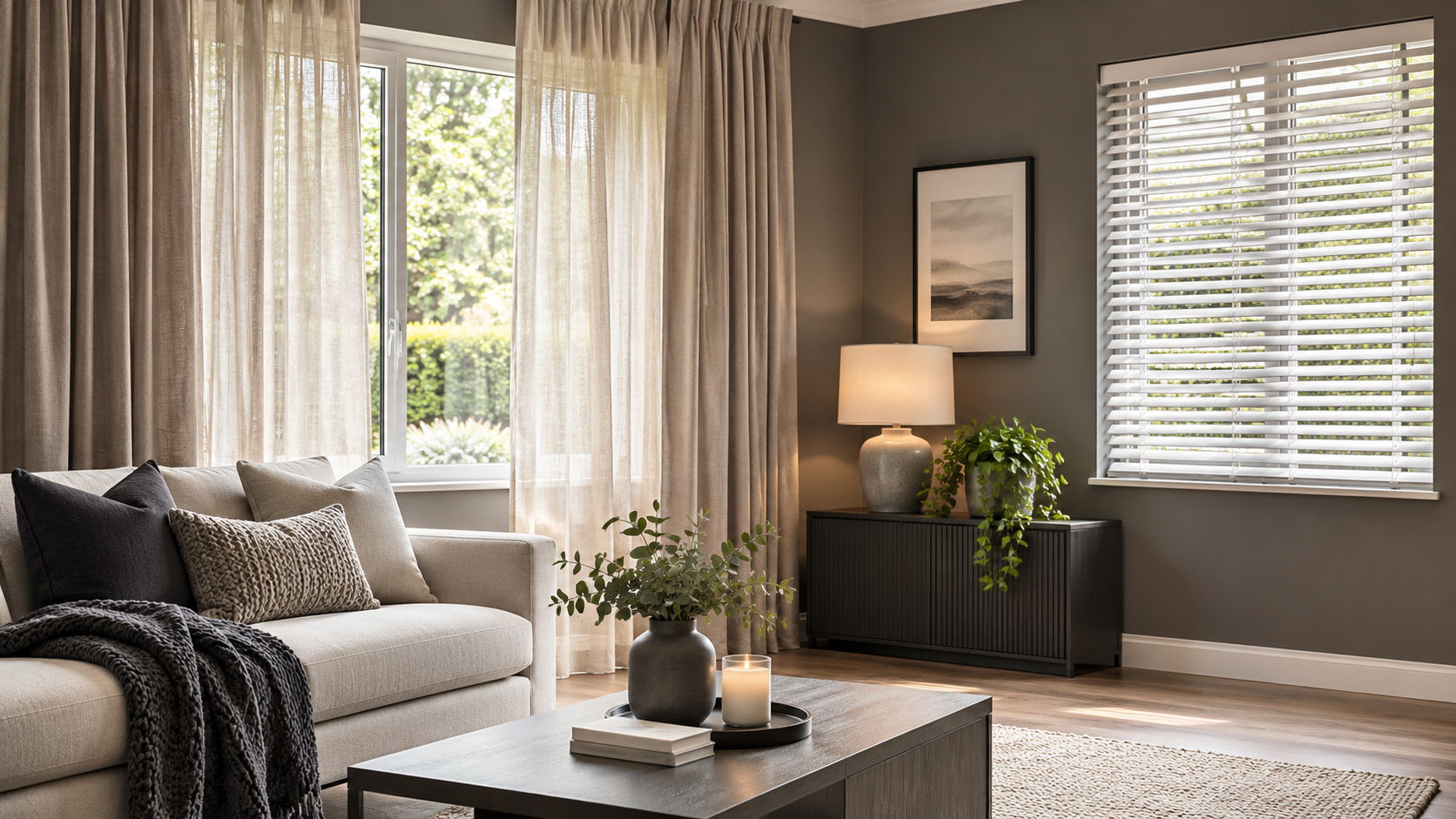
Choosing between curtains and blinds can make a big difference to the comfort and appearance of your home. Both options provide privacy, manage natural light and enhance interior design. However, they differ in cost, maintenance, insulation and everyday convenience.
In this curtains vs blinds comparison, we’ll explore the advantages and disadvantages of each option. We’ll also examine which works best for bedrooms, living rooms, kitchens and bathrooms. By the end, you’ll have a clearer idea of which window covering suits your space, budget and lifestyle.
Curtains vs Blinds: Understanding the Key Differences

Curtains consist of fabric panels that hang from a pole or track. They come in many colours, patterns and materials, making them suitable for traditional and modern interiors. Depending on the fabric, curtains can create a soft, decorative appearance or a more formal finish.
Blinds fit inside or around the window opening and usually offer a more compact design. Popular styles include roller, Venetian, Roman and vertical blinds. Many provide adjustable light control, while others focus on privacy, insulation or a streamlined appearance. The best choice depends on how you use the room.
Advantages of Curtains
Curtains offer excellent design flexibility. Lightweight fabrics create an airy atmosphere, while heavier materials add warmth and texture. You can also choose from different lengths, headings and lining options. This makes curtains especially useful when you want window coverings to become a feature of the room.
Lined curtains can also improve comfort by reducing draughts and limiting heat transfer around windows. Blackout linings help darken bedrooms, while thicker fabrics may soften outside noise. In addition, many ready-made curtains are straightforward to replace when you update your décor.
Disadvantages of Curtains
Although curtains offer many benefits, they also have some drawbacks. Fabric panels can collect dust, pet hair and household odours. Certain materials require professional cleaning, which increases maintenance costs. Long curtains may also take up valuable space around furniture or radiators.
Curtains generally provide less precise light control than adjustable blinds. Opening them often exposes much of the window, reducing privacy during daylight hours. Heavy fabrics can also feel unsuitable for small rooms. In humid spaces, poor ventilation may encourage moisture problems and fabric deterioration.
Advantages of Blinds
Blinds provide a neat, space-saving solution for many windows. Roller and pleated designs suit smaller rooms, while Venetian blinds offer flexible light control. Adjustable slats allow you to manage daylight and privacy without fully opening the window covering. This makes blinds particularly practical for home offices and street-facing rooms.
Many blinds are also easy to maintain. Aluminium and PVC slats can usually be wiped clean, making suitable products useful in kitchens and bathrooms. Cellular blinds may improve thermal comfort, while blackout roller blinds help reduce unwanted light. With numerous colours and finishes available, blinds can complement almost any interior style.
Curtains vs Blinds for Light Control and Privacy
Light control is an important consideration when choosing window coverings. Blackout curtains can darken bedrooms effectively, especially when fitted with suitable tracks or overlapping panels. Sheer curtains soften daylight while providing some daytime privacy. However, they offer limited privacy after dark when indoor lights are switched on.
Blinds often provide greater control over incoming light. Venetian slats can be tilted to reduce glare without completely blocking the window. Day-and-night roller blinds also offer flexible privacy settings. Nevertheless, blackout roller blinds may allow light around their edges. For complete darkness, installation quality matters as much as the material.
Curtains vs Blinds for Thermal Insulation
Window coverings can help improve indoor comfort by reducing heat transfer through windows. Thick, lined curtains create an additional barrier against cold surfaces and draughts. Thermal linings may improve their performance further. However, curtains work best when they fit closely around the window without covering radiators or other heat sources.
Certain blinds also offer useful insulation benefits. Cellular blinds feature a honeycomb structure that traps air and helps limit heat movement. Well-fitted designs can reduce heat loss during colder months and unwanted heat gain in warmer weather. Ultimately, insulation performance depends on the material, window type and quality of installation.
Curtains vs Blinds for Cleaning and Maintenance
Curtains need regular attention to prevent dust and allergens from building up. Some lightweight fabrics are machine washable, making routine cleaning straightforward. However, lined or delicate curtains may require professional care. Always check the manufacturer’s instructions before washing, as certain materials can shrink or lose their shape.
Blinds often require less intensive cleaning, although maintenance varies by design. Roller blinds with suitable fabrics can usually be wiped gently, while Venetian slats need regular dusting. Moisture-resistant materials are particularly practical in kitchens and bathrooms. For busy households, ease of cleaning may be a deciding factor.
Curtains vs Blinds: Cost and Value for Money
The cost of curtains depends on fabric, size, lining and fitting requirements. Ready-made curtains can be affordable, especially for standard windows. However, made-to-measure designs and premium fabrics often cost considerably more. Remember to include poles, tracks and installation accessories when comparing prices.
Blinds offer options across a wide range of budgets. Basic roller blinds are often economical, while motorised and made-to-measure products command higher prices. Installation costs also vary according to window size and complexity. For the best value, compare durability, maintenance and performance rather than purchase price alone.
Curtains vs Blinds: Which Is Better for Different Rooms?
Different rooms have different requirements for privacy, light control and maintenance. Curtains may suit spaces where comfort and decoration matter most. Meanwhile, blinds often work better where moisture resistance or precise light adjustment is important. The following room-by-room comparison will help you decide.
Best for Living Rooms: Curtains or Blinds?
Living rooms benefit from window coverings that balance comfort, privacy and appearance. Curtains create a softer atmosphere and can complement furniture, flooring and wall colours. Full-length designs also add visual height, making them attractive for larger windows and open-plan spaces.
Blinds suit living rooms where adjustable daylight and a streamlined finish are priorities. Venetian blinds offer flexible privacy, while Roman blinds combine fabric styling with a compact design. For additional versatility, consider pairing sheer curtains with blinds. This allows you to adjust light levels without sacrificing decoration.
Best for Bedrooms: Curtains or Blinds?
Bedrooms need effective privacy and comfortable sleeping conditions. Blackout curtains are a popular choice because they reduce incoming light and create a cosy atmosphere. Thermal linings may also improve comfort during colder weather. However, careful fitting is essential to minimise gaps around the window.
Blackout roller blinds provide a tidy alternative, especially in smaller bedrooms. Cellular blinds can also improve insulation while maintaining a discreet appearance. If darkness is your main priority, combining a blackout blind with lined curtains may deliver better results. Choose cordless or child-safe systems for children’s bedrooms.
Best for Kitchens: Curtains or Blinds?
Kitchens need window coverings that cope with cooking moisture, grease and regular cleaning. Blinds are often the more practical choice, particularly around sinks and food preparation areas. Aluminium Venetian blinds and moisture-resistant roller blinds offer easy maintenance. They also allow you to control daylight without taking up valuable space.
Curtains can still work in kitchens, especially away from cooking zones. Short, washable designs add softness without overwhelming the room. However, avoid placing loose fabrics near hobs or other heat sources. For most busy kitchens, suitable moisture-resistant blinds provide a simpler solution.
Best for Bathrooms: Curtains or Blinds?
Bathrooms present additional challenges because of humidity, condensation and limited ventilation. Moisture-resistant blinds are usually the better option. PVC Venetian blinds and suitable waterproof roller blinds can withstand damp conditions more effectively than ordinary fabrics. Their compact design also helps maintain a clean, uncluttered appearance.
Traditional fabric curtains may absorb moisture and develop unpleasant odours in poorly ventilated bathrooms. They can also take longer to dry after exposure to steam. If you prefer a softer appearance, choose a washable fabric designed for humid environments. Regardless of your choice, good ventilation remains essential.
Best for Home Offices: Curtains or Blinds?
Home offices benefit from adjustable daylight that reduces screen glare without making the room too dark. Venetian blinds are particularly useful because their slats allow precise light control. Roller blinds with suitable light-filtering fabrics also provide a tidy appearance. Both options work well around desks and computer equipment.
Curtains can create a warmer atmosphere and help soften sound reflections within the room. However, heavy fabrics may reduce useful daylight when closed. For most workspaces, adjustable blinds offer greater flexibility throughout the day. Consider the position of your desk and windows before choosing a design.
Best for Large Windows and Patio Doors: Curtains or Blinds?
Large windows offer plenty of natural light but can present challenges with privacy and temperature control. Full-length curtains create an attractive finish and work particularly well across wide openings. Ceiling-mounted tracks can provide smooth operation, while suitable linings may improve comfort during colder weather.
Vertical blinds are another practical option for patio doors and wide windows. Their adjustable slats provide flexible light control, and many designs slide aside for easy access. Panel blinds can also suit contemporary interiors. Before buying, check that the covering will not obstruct door handles or movement.
Can You Use Curtains and Blinds Together?
Combining curtains and blinds can provide greater flexibility than using either option alone. For example, a light-filtering roller blind can manage daytime privacy, while lined curtains improve comfort after dark. This layered approach also adds texture and depth to the room without sacrificing practical light control.
Layered window coverings work particularly well in bedrooms and living rooms. However, consider the available space before installing both systems. Curtain tracks, blind brackets and window handles need sufficient clearance. Choose complementary colours and materials to create a coordinated finish rather than an overcrowded appearance.
Curtains vs Blinds: Safety and Ease of Operation
Safety matters when choosing window coverings for family homes. Loose blind cords and chains can pose serious risks to young children. Cordless blinds or systems with appropriate safety devices are safer options. Keep furniture away from accessible cords and follow the manufacturer’s installation instructions carefully.
Curtains are often simple to operate, although heavy panels may require stronger tracks and fittings. Motorised blinds offer convenient control for large or hard-to-reach windows. Some systems also support timers or smart-home integration. Before purchasing, consider accessibility, reliability and the long-term availability of replacement parts.
Curtains vs Blinds: At-a-Glance Comparison
| Feature | Curtains | Blinds |
|---|---|---|
| Appearance | Soft, decorative | Neat, compact |
| Light control | Depends on fabric and lining | Adjustable with suitable styles |
| Privacy | Good when closed | Flexible with adjustable slats |
| Insulation | Good with thermal linings | Good with cellular designs |
| Cleaning | May require washing | Often wipe-clean |
| Small spaces | Can take up wall space | Usually space-saving |
| Typical cost | Varies by fabric and fitting | Varies by type and fitting |
What to Consider Before Buying Curtains or Blinds
Before choosing curtains or blinds, measure your windows carefully and consider how each room is used. Decide whether privacy, light control, insulation or appearance matters most. Also check the available space around window handles, radiators and furniture.
Compare the total cost, including fittings and installation, rather than focusing only on the purchase price. Review cleaning requirements, product warranties and child-safety features. If possible, request fabric or material samples before ordering. This helps you assess colour, texture and quality in your own home.
Frequently Asked Questions About Curtains vs Blinds
Are curtains or blinds better for keeping a room cool?
Both can help reduce unwanted heat gain when used correctly. Light-coloured or reflective blinds can limit direct sunlight, while suitable lined curtains provide another barrier. Performance depends on the window, material and fit. Exterior shading may offer greater protection against strong sunshine.
Which lasts longer, curtains or blinds?
Durability depends more on material quality and maintenance than the type of covering. Well-made curtains can last for years with proper care. Quality blinds can also provide long service, although their moving parts may eventually need attention. Consider warranties and replacement parts before buying.
Are curtains or blinds better for small rooms?
Blinds are often more practical in compact rooms because they sit close to the window. Roller and pleated styles create a tidy appearance without occupying much wall space. However, carefully chosen curtains can make a small room feel taller, especially when mounted above the window.
Final Verdict: Should You Choose Curtains or Blinds?
The choice between curtains and blinds depends on your priorities. Curtains are ideal when you want softness, decorative impact and flexible fabric options. Blinds often provide better space efficiency, adjustable daylight and practical maintenance. Neither option is universally better, so consider the requirements of each room before deciding.
For bedrooms and living rooms, curtains or layered combinations can create a comfortable, attractive finish. Kitchens, bathrooms and home offices often benefit from suitable blinds. Whatever you choose, accurate measurements, safe fittings and quality materials will help you achieve lasting results.
If you’re leaning towards blinds, explore our complete guide to the best blinds for every room. It covers popular blind styles, practical buying considerations and a useful measuring calculator.