
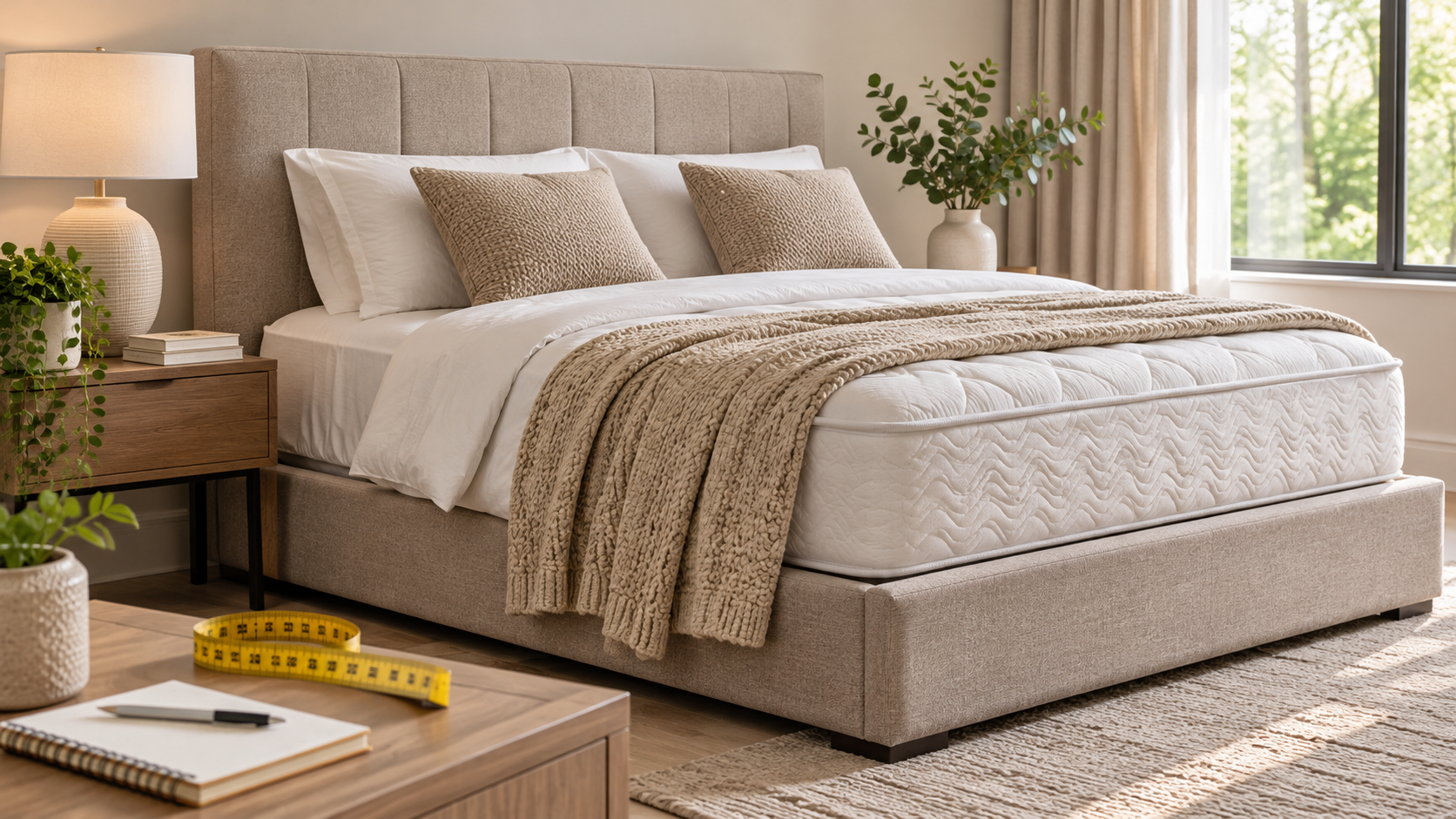
Choosing the right bed and mattress is one of the most important decisions when furnishing a bedroom. A suitable combination can improve everyday comfort, provide reliable support and complement your interior design. However, with so many sizes, materials and construction types available, finding the right option can feel overwhelming.
This complete buying guide explains how to choose a bed and mattress that suit your space, sleeping preferences and budget. We’ll compare popular bed frames, explore different mattress materials and explain what to check before buying. Whether you’re furnishing a new bedroom or replacing an older bed, these practical tips will help you make a more informed decision.
Understanding Bed and Mattress Sizes
Choosing the correct bed size is essential for comfort and practical bedroom planning. Common options include single, double, queen and king-size beds. However, these names do not represent identical measurements worldwide. Dimensions can vary between countries and manufacturers, so always check the actual width and length before ordering.
Single beds are suitable for children, guest rooms and smaller bedrooms. Double beds provide more sleeping space, although couples may prefer a wider option. Queen and king-size mattresses offer additional room for movement, making them popular for shared bedrooms. Taller sleepers should also consider mattress length rather than focusing only on width.
Bed frames and mattresses must have compatible dimensions. Some upholstered or storage frames extend beyond the mattress, increasing the overall footprint. Before purchasing, confirm both measurements and check the manufacturer’s recommended mattress specifications. This is particularly important when combining products from different brands or countries.
How to Measure Your Bedroom for a New Bed
Start by measuring the length and width of your bedroom. Identify the best position for the bed, taking account of doors, windows, wardrobes and other furniture. Allow enough space to walk comfortably around the frame and access bedside storage. A larger mattress may seem appealing, but it should not make the room difficult to use.
As a practical starting point, aim for approximately 60–75 cm of clear walking space beside accessible sides of the bed where possible. This is a planning guideline rather than a fixed requirement. Smaller rooms may need a different layout, particularly when the bed sits against a wall. Check that drawers and wardrobe doors can open fully.
Remember to measure the delivery route as well as the bedroom. Narrow staircases, doorways and awkward corners can prevent large bed frames from reaching their intended location. Divan bases, flat-pack frames and mattresses delivered in boxes may offer greater flexibility. Always confirm package dimensions before placing an order.
Choosing the Right Type of Bed Frame

Bed frames come in several designs, each offering different benefits. Platform beds provide a simple, modern appearance and usually support the mattress without a separate box spring. However, the support surface must suit the mattress manufacturer’s requirements. Check slat spacing, weight limits and ventilation before choosing a platform design.
Divan beds typically feature a sturdy upholstered base, sometimes with built-in drawers. They are popular where additional bedroom storage is useful. Ottoman beds offer another space-saving solution, with a lifting mattress platform that reveals storage underneath. Before buying either design, consider how easily you can access the storage compartments.
Adjustable bed frames allow users to raise or lower sections of the sleeping surface. They can improve convenience for reading, relaxing or finding a preferred resting position. However, they usually cost more and require a compatible mattress. Consider the controls, motor warranty and available space before purchasing.
Bed Frame Materials: Wood, Metal or Upholstered?
Wooden bed frames offer a timeless appearance and suit many interior styles. Solid hardwood can provide excellent durability, while engineered wood often offers a more affordable alternative. However, construction quality matters more than appearance alone. Inspect joints, fixings and the mattress support system before deciding.
Metal bed frames are available in traditional and contemporary designs. Many are relatively lightweight and straightforward to assemble. A well-constructed metal frame can provide reliable support, although loose connections may cause unwanted noise. Check the frame’s stability, finish and weight capacity rather than relying on material alone.
Upholstered bed frames create a softer, more decorative finish. Fabric-covered headboards can make sitting upright more comfortable, while different colours and textures offer design flexibility. However, upholstery may require regular cleaning and can collect dust. Choose durable, easy-care materials if the bed will receive frequent use.
Understanding the Different Types of Mattresses
Mattresses use different materials and support systems to create their distinctive feel. The most common options include memory foam, innerspring, pocket-sprung, latex and hybrid mattresses. Each design offers advantages, but no single type suits everyone. Your preferred sleeping position, body weight and comfort requirements should influence your decision.
Memory Foam Mattresses
Memory foam mattresses respond to body weight and temperature, creating a close-contouring feel. They can distribute pressure and reduce movement transfer between sleeping partners. However, some designs retain heat or make changing position more difficult. Look for suitable ventilation features and consider whether you prefer a softer or more responsive sleeping surface.
Innerspring Mattresses
Traditional innerspring mattresses use interconnected metal coils to provide support. They often feel responsive and allow airflow through the spring structure. Many are available at accessible prices, although comfort depends on the cushioning layers above the coils. Some designs transfer more movement between partners than individually pocketed springs.
Pocket-Sprung Mattresses
Pocket-sprung mattresses contain individual springs enclosed in separate fabric pockets. This construction allows each spring to respond more independently to pressure and movement. As a result, these mattresses can provide targeted support and reduce disturbance between sleeping partners. However, spring count alone does not determine quality. Consider the spring design, comfort layers and overall construction before buying.
Latex Mattresses
Latex mattresses offer a responsive sleeping surface that combines cushioning with support. Natural latex comes from rubber tree sap, while synthetic and blended alternatives are also available. Many latex mattresses provide good durability and recover their shape quickly after pressure is removed. However, they can be relatively expensive and heavy. Check the material composition carefully, particularly if natural materials are a priority.
Hybrid Mattresses
Hybrid mattresses combine a spring support system with comfort layers made from materials such as memory foam or latex. This design aims to balance cushioning, responsiveness and support. Many hybrids also provide better airflow through their spring layers than solid foam constructions. However, performance varies depending on the materials and thickness of each layer.
A well-designed hybrid can suit sleepers who want pressure relief without the deep sinking sensation associated with some foam mattresses. Nevertheless, hybrid construction does not automatically guarantee better quality. Compare the spring system, foam density, edge support and warranty. The best choice is the mattress that provides suitable comfort and support for your individual needs.
How to Choose the Right Mattress Firmness
Mattress firmness describes how soft or hard a sleeping surface feels. Manufacturers commonly use descriptions such as soft, medium, medium-firm and firm. However, these ratings are not standardised across the industry. A medium-firm mattress from one brand may feel noticeably different from a similar product made by another manufacturer.
Softer mattresses generally allow greater cushioning around the shoulders and hips. Firmer designs usually create a more stable surface with less sinking. However, firmness and support are not the same thing. A mattress should provide enough cushioning for comfort while helping maintain a natural, comfortable spinal position.
Body weight also influences how a mattress feels. Lighter sleepers may experience less compression, making a mattress feel firmer. Heavier sleepers often compress the comfort layers more deeply and may need a different support design. Whenever possible, test several firmness levels rather than assuming the firmest mattress will provide the best support.
Choosing a Mattress for Your Sleeping Position
Side sleepers often benefit from a mattress that cushions the shoulders and hips while supporting the waist. A medium-soft or medium-firm feel may be a useful starting point, depending on body weight and personal preference. Excessive firmness can create uncomfortable pressure points, while insufficient support may allow the hips to sink too deeply.
Back sleepers generally need balanced support beneath the shoulders, lower back and hips. Medium-firm mattresses are a common starting point because they can combine cushioning with stability. However, the ideal feel depends on individual proportions and comfort preferences. Look for a mattress that supports the body without creating noticeable pressure or excessive sinking.
Front sleepers may prefer a firmer surface that limits excessive sinking around the hips and abdomen. Combination sleepers, who change position during the night, often benefit from a responsive mattress that makes movement easier. In both cases, personal comfort remains important. Test different options and consider a trial period before committing to a purchase.
Mattress Temperature Regulation and Breathability
Temperature regulation can make a noticeable difference to sleeping comfort. Some mattresses retain more body heat than others, particularly when thick foam layers restrict airflow. If you regularly feel too warm at night, consider the mattress construction, cover material and ventilation features before buying.
Spring-based and hybrid mattresses often allow air to circulate through their internal structure. Latex can also provide a responsive sleeping surface, although breathability varies between designs. Memory foam mattresses may include perforated layers or other features intended to improve temperature management. However, cooling claims should be assessed carefully because performance differs between products.
Bedding and bedroom conditions also influence temperature. Breathable sheets, suitable mattress protectors and appropriate room ventilation can improve overall comfort. Rather than relying on a mattress advertised as cooling, consider the complete sleeping environment. This is especially important in warmer climates or bedrooms without effective temperature control.
Motion Isolation, Edge Support and Mattress Durability
Motion isolation describes how effectively a mattress limits movement across its surface. This feature is particularly useful for couples when one person changes position frequently. Memory foam and individually pocketed springs often reduce movement transfer, although results vary between models. If possible, test the mattress with your sleeping partner before purchasing.
Edge support refers to the stability of a mattress around its perimeter. Stronger edges can make sitting on the bed more comfortable and help sleepers use more of the available surface. This feature may be particularly valuable on smaller shared mattresses. Check whether the edges compress excessively when sitting or lying near them.
Mattress durability depends on material quality, construction, body weight and everyday use. High-quality foams, suitable spring systems and robust covers can contribute to a longer useful lifespan. However, a higher price does not automatically guarantee better durability. Review warranty conditions, care instructions and evidence of long-term performance before making your decision.
How Much Should You Spend on a Bed and Mattress?
Bed and mattress prices vary considerably depending on size, materials, construction and brand. Rather than setting your budget around the most expensive option, focus on the features that matter most. A well-made mid-range mattress may provide better value than a premium model with unnecessary extras. Comfort, suitable support and construction quality should take priority over appearance or marketing claims.
Divide your budget between the mattress, bed frame and essential accessories. A sturdy, affordable frame paired with a suitable mattress can be a sensible combination. Remember to include delivery, assembly, mattress protection and removal of your old bed where necessary. These additional expenses can significantly affect the final purchase price.
Compare products using their specifications rather than promotional discounts alone. Check the materials, support system, warranty and expected maintenance requirements. A lower initial price may not represent good value if the mattress loses comfort quickly. Equally, an expensive product is not necessarily the best choice for your sleeping preferences.
Mattress Trials, Returns and Warranties: What to Check
Some mattress retailers offer home trial periods, allowing customers to test a mattress over several weeks or months. These trials can be particularly useful when buying online. However, terms vary between retailers. Check whether a minimum trial period applies, whether exchanges are permitted and whether collection or return charges are deducted from any refund.
Return policies deserve careful attention, especially when purchasing a mattress from another country. Some retailers require protective covers or impose conditions relating to stains and damage. Others may offer exchanges rather than refunds. Always read the full policy before ordering, including any restrictions on opened or used mattresses and the cost of returning bulky items.
A mattress warranty generally covers specified manufacturing defects rather than normal wear or changes in comfort preference. Coverage may depend on using an approved bed base and following care instructions. Check the warranty duration, exclusions and any minimum sagging depth required for a claim. Remember that warranty terms and statutory consumer rights vary by country.
Mattress Types Compared: Which Is Right for You?
| Mattress Type | Main Advantages | Points to Consider |
|---|---|---|
| Memory Foam | Pressure relief and reduced movement transfer | Some models retain heat or feel less responsive |
| Innerspring | Responsive feel, airflow and accessible options | Movement transfer and cushioning vary by design |
| Pocket-Sprung | Independent spring response and targeted support | Spring count alone does not indicate quality |
| Latex | Responsive cushioning and potentially good durability | Can be heavy and relatively expensive |
| Hybrid | Combines spring support with foam or latex comfort | Quality and performance depend on construction |
Use this comparison as a starting point rather than a final ranking. Memory foam may appeal to sleepers who prioritise pressure relief, while spring-based mattresses often suit those who prefer a more responsive feel. Latex and hybrid designs provide further options. Always compare individual products, check their specifications and choose a mattress that matches your comfort preferences and budget.
Bed and Mattress Buying Checklist
Before ordering a new bed and mattress, review the essential measurements, features and purchasing conditions. A simple checklist can prevent expensive mistakes and make it easier to compare products from different retailers. Use the following points to assess whether a particular combination meets your requirements.
- Measure the bedroom and confirm the available floor space.
- Check the actual bed frame and mattress dimensions.
- Confirm the mattress is compatible with the chosen bed base.
- Choose a mattress type and firmness that suit your preferences.
- Consider temperature regulation and movement transfer.
- Check the frame’s construction, stability and weight capacity.
- Compare prices, delivery charges and assembly costs.
- Review mattress trial periods, returns and warranty conditions.
- Measure doorways, staircases and the delivery route.
- Read independent reviews and check the retailer’s reputation.
Common Mistakes to Avoid When Buying a Bed and Mattress
One common mistake is choosing a mattress solely because it is heavily discounted. A low price does not guarantee poor quality, but promotional savings should never replace careful product comparisons. Check the materials, support system and return conditions. Focus on long-term comfort and value rather than the size of the advertised discount.
One common mistake is choosing a mattress solely because it is heavily discounted. A low price does not guarantee poor quality, but promotional savings should never replace careful product comparisons. Check the materials, support system and return conditions. Focus on long-term comfort and value rather than the size of the advertised discount.
Buyers sometimes focus on mattress comfort while overlooking delivery, maintenance and everyday convenience. A large bed may restrict movement around the bedroom, while a heavy mattress can make cleaning or rotating difficult. Check the complete product dimensions, care instructions and delivery arrangements to avoid problems after installation.
Frequently Asked Questions About Beds and Mattresses
How Often Should You Replace a Mattress?
Many mattresses remain usable for approximately seven to ten years, although their actual lifespan depends on materials, construction and care. Age alone should not determine replacement. Look for noticeable sagging, reduced support, persistent discomfort or damage. Regularly inspect your mattress and follow the manufacturer’s maintenance recommendations.
Is a Firm Mattress Better Than a Soft Mattress?
Neither option is automatically better. The ideal firmness depends on body weight, sleeping position and personal comfort. A mattress should provide suitable support while cushioning pressure points. Medium-firm designs are a useful starting point for many sleepers, but testing different options is the best way to identify your preferred feel.
Can You Use a New Mattress on an Existing Bed Frame?
Yes, provided the existing frame is in good condition and meets the mattress manufacturer’s requirements. Check the dimensions, slat spacing, support structure and weight capacity. An unsuitable base may affect comfort, reduce mattress lifespan or invalidate certain warranty conditions. Replace damaged or unstable frames before installing a new mattress.
Final Thoughts: Choosing the Right Bed and Mattress
Choosing the right bed and mattress involves more than selecting an attractive design or popular brand. The best combination should fit your bedroom, provide suitable support and match your sleeping preferences. Consider the frame construction, mattress materials, firmness and practical features before making your decision.
Take time to compare products, check measurements and understand the retailer’s trial and return policies. A carefully chosen mattress paired with a sturdy, compatible frame can provide lasting comfort without unnecessary expense. Remember that personal comfort matters more than marketing claims or premium price tags.
Whether you’re furnishing a guest room or upgrading your main bedroom, focus on quality, practicality and value for money. Once you’ve chosen your bed, consider how your window coverings can improve bedroom privacy and light control. Our curtains vs blinds guide explains the advantages of each option and helps you choose the right solution for your home.