
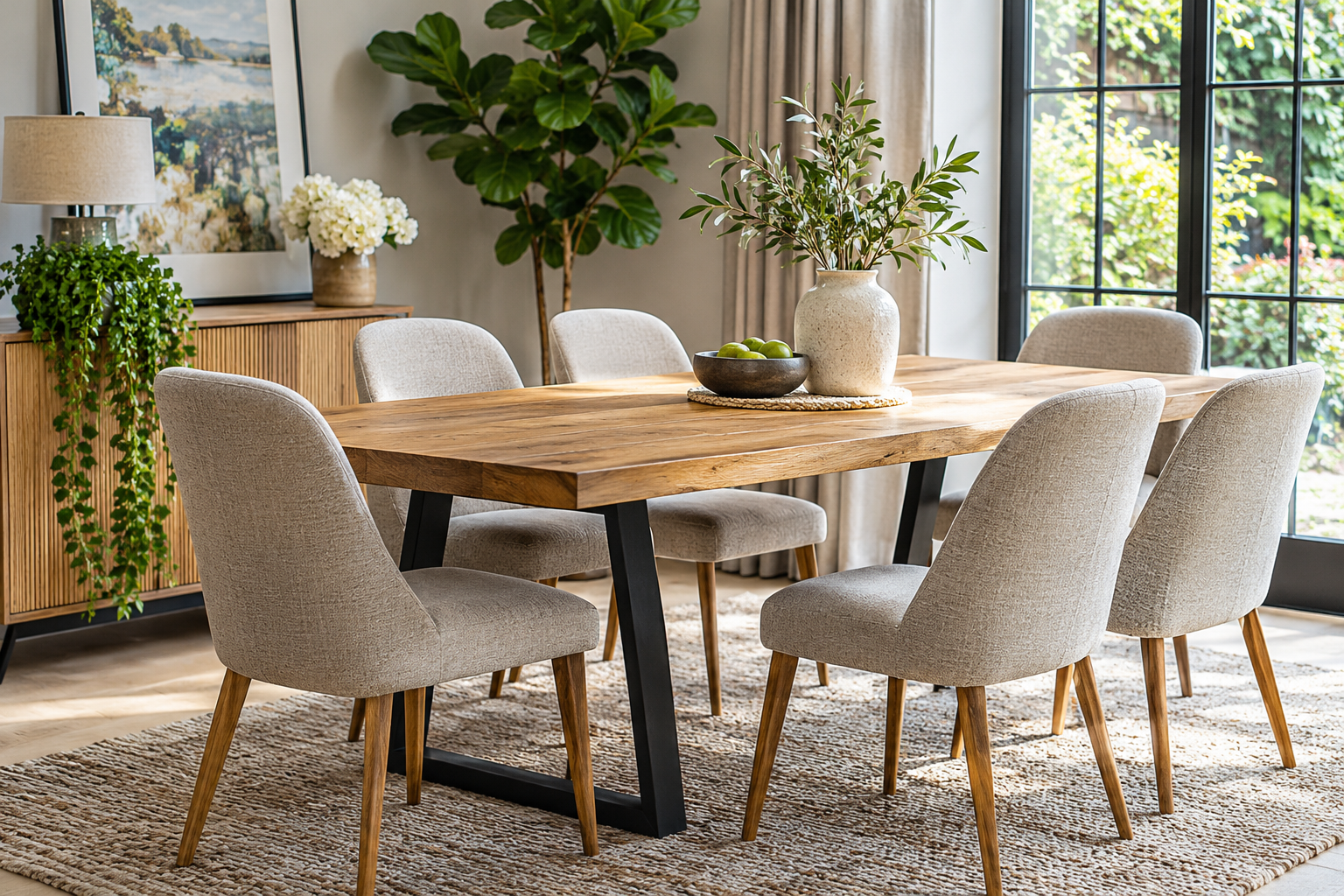
Knowing how to choose the right dining table can transform both the appearance and functionality of your home. A well-chosen table provides a comfortable space for everyday meals, family gatherings and entertaining guests. However, finding the right balance between size, style and practicality requires careful consideration.
From solid wood and glass to ceramic and engineered materials, dining tables come in a wide range of designs. Rectangular tables often suit larger rooms, while round designs can work particularly well in compact spaces. Extendable options also provide additional flexibility for households that regularly entertain guests.
In this comprehensive buying guide, we explore dining table sizes, shapes, materials, construction and seating arrangements. We also explain how to measure your dining area, compare different designs and avoid common purchasing mistakes. Whether you have a small apartment or a spacious family home, this guide will help you make a confident and informed decision.
Understanding Dining Table Sizes and Dimensions
Choosing the correct dining table size is essential for creating a comfortable and functional dining area. An oversized table can restrict movement, while a smaller design may provide insufficient seating. Therefore, consider both the available floor space and your everyday seating requirements.
Most standard dining tables measure between 74 and 76 cm in height. This range generally provides comfortable seating when paired with standard dining chairs. However, always check the clearance between the chair seat and the underside of the table.
A rectangular table measuring approximately 120 cm long can typically accommodate four people. Larger designs between 150 and 180 cm generally seat six people comfortably. Meanwhile, tables measuring 200 to 240 cm often accommodate eight people, depending on their width and leg positions.
Ideally, allow approximately 60 cm of table edge per person for comfortable dining. Additional space may be necessary when using wider chairs or chairs with armrests. Remember that table legs and support structures can also affect the usable seating capacity.
How to Measure Your Dining Area for a Table
Accurate measurements can help you avoid purchasing a dining table that overwhelms your room. Start by measuring the length and width of your available dining area. Include any existing furniture, radiators, doorways and other permanent features that could restrict movement.
Aim to leave at least 90 cm between the table edge and surrounding walls or furniture. This clearance provides space for pulling out chairs and moving around the table. For frequently used walkways, consider increasing the clearance to approximately 110 or 120 cm.
For example, imagine a dining area measuring 360 cm long and 280 cm wide. Allowing 90 cm of clearance on each side leaves space for a table measuring 180 by 100 cm. This simple calculation provides a useful starting point when comparing different table sizes.
Before placing an order, use masking tape to mark the proposed table dimensions on your floor. This practical technique helps you visualise the layout and identify potential restrictions. Finally, check doorways, corridors and staircases to ensure the furniture can reach its intended location.
Choosing the Right Dining Table Shape
The shape of your dining table influences seating arrangements, movement and the overall appearance of your room. Different shapes offer distinct advantages depending on the available space. Therefore, consider your room layout and everyday dining habits before making a decision.
Fixed dining tables feature a permanent tabletop without additional extension mechanisms. Their simpler construction often provides excellent stability and requires less maintenance. Moreover, fixed designs suit households with consistent seating requirements and sufficient dining space.
Extendable dining tables provide greater flexibility by increasing the available tabletop surface when required. Common extension systems include butterfly leaves, removable panels and sliding mechanisms. These designs allow households to maintain a compact everyday layout while accommodating additional guests.
Before purchasing an extendable table, examine the quality and operation of its extension mechanism. Check whether the tabletop remains stable when fully extended. In addition, consider whether extension panels require separate storage or fit neatly within the table itself.
Although extendable tables offer versatility, their additional components can increase purchase costs and maintenance requirements. Always measure your dining area using the fully extended dimensions. Ultimately, the best choice should accommodate your everyday needs without compromising comfort or accessibility.
Choosing the Best Dining Table Material
The material of your dining table affects its appearance, durability, maintenance requirements and overall cost. Each material offers different advantages for everyday use. Therefore, consider your household needs and budget before selecting a particular finish.
Solid wood dining tables offer natural character, strength and timeless appeal. Popular hardwoods include oak, walnut and acacia, each offering distinctive grain patterns. Although solid wood can be expensive, proper maintenance can significantly extend its lifespan.
Engineered wood and veneered dining tables often provide an affordable alternative to solid timber. Quality veneers offer an attractive natural wood appearance without the higher purchase price. However, thinner veneers and poorly sealed edges may be vulnerable to moisture and damage.
Glass dining tables create a light, contemporary appearance that can make smaller rooms feel more spacious. Look for toughened safety glass and a sturdy supporting frame. Nevertheless, glass surfaces require regular cleaning to remove fingerprints and visible marks.
Ceramic dining tables offer excellent resistance to scratches, stains and everyday heat. Their contemporary finishes can also replicate the appearance of natural stone. However, ceramic surfaces may chip under heavy impacts, particularly around exposed edges.
Natural stone, including marble and granite, provides a distinctive and luxurious appearance. Marble requires particular care because acidic liquids can damage its surface. Additionally, stone tables can be extremely heavy, making delivery and repositioning more challenging.

Dining Table Construction: What Makes a Table Durable?
A dining table should withstand regular use without developing excessive movement or structural weaknesses. Although appearance is important, construction quality plays a significant role in long-term performance. Examine the supporting frame, joints and tabletop before making a purchase.
Traditional woodworking joints, such as mortise and tenon connections, can provide excellent strength when manufactured correctly. Well-designed bolted connections can also offer reliable structural support. However, poorly fitted joints and inadequate fixings may cause movement over time.
Tabletop thickness and supporting structures influence the overall strength of a dining table. Larger tables require adequate support to prevent excessive bending or sagging. Furthermore, solid timber construction should accommodate natural expansion and contraction as humidity levels change.
The position and design of table legs affect both stability and seating comfort. Four-leg designs often provide reliable support, while pedestal bases can offer greater flexibility for chair placement. Check that the base provides sufficient stability without restricting legroom.
Finally, examine the quality of protective finishes, exposed edges and extension mechanisms where applicable. Smooth surfaces and securely fitted components often indicate careful manufacturing. A well-constructed dining table can offer better long-term value than a cheaper alternative requiring frequent replacement.
Choosing the Right Dining Chairs
Comfortable dining chairs are just as important as choosing the right dining table. Their dimensions, materials and design influence both seating comfort and the overall dining experience. Therefore, consider how the chairs will complement your chosen table.
Standard dining chairs typically have a seat height of approximately 43 to 48 cm. Aim for around 25 to 30 cm between the seat and the underside of the table. This clearance helps provide sufficient legroom during meals.
Upholstered dining chairs provide additional comfort, particularly during longer meals and social gatherings. Fabric upholstery offers warmth and texture, while leather and synthetic alternatives can simplify routine cleaning. However, always check the manufacturer’s recommended cleaning instructions before purchasing.
Wooden and metal dining chairs often offer practical solutions for busy households. Their smooth surfaces generally make everyday cleaning easier. Adding removable seat cushions can improve comfort while allowing you to change the appearance when required.
Finally, consider chair width, armrest height and the position of the table legs. Chairs with armrests require additional clearance and may not fit beneath every tabletop. Always check the combined dimensions before purchasing a complete dining set.
Dining Table Styles: Modern, Traditional and Contemporary
Your dining table should complement the surrounding interior without sacrificing everyday practicality. Furniture styles vary considerably in their materials, colours and decorative details. Understanding these differences can help you create a coordinated and welcoming dining area.
Modern dining tables typically feature clean lines, simple shapes and minimal decoration. Common materials include glass, metal and smooth timber finishes. These designs work particularly well in minimalist interiors and open-plan living spaces.
Traditional dining tables often feature rich timber finishes, decorative detailing and substantial supporting frames. Their timeless appearance complements classic interiors and formal dining rooms. Furthermore, quality wooden designs can retain their appeal for many years.
Contemporary dining tables reflect current interior design trends through innovative materials and distinctive shapes. Ceramic surfaces, sculptural bases and contrasting finishes are popular features. Unlike modern design, contemporary styling continues to evolve as new trends emerge.
Industrial dining tables frequently combine natural timber with exposed metal frames. Their contrasting materials create a distinctive appearance that suits urban and rustic interiors. Meanwhile, Scandinavian designs favour lighter wood tones, simple forms and understated finishes.
Before selecting a particular style, consider your existing flooring, wall colours, lighting and surrounding furniture. Coordinating these elements can create a more balanced and visually appealing interior. Ultimately, choose a design that reflects your personal preferences while meeting your practical requirements.
Coordinating dining and living room furniture is particularly important in open-plan homes. Matching materials, colours and finishes can create a consistent interior style. For additional furniture advice, explore our guide on how to choose the right sofa.
Choosing a Dining Table for Homes with Children or Pets
Busy family households require dining furniture that combines durability, comfort and everyday practicality. Children and pets can expose furniture to accidental spills, scratches and frequent impacts. Therefore, selecting suitable materials and finishes can reduce maintenance requirements and unnecessary repair costs.
Round and oval dining tables eliminate sharp tabletop corners, reducing the risk of accidental bumps. Rectangular designs with rounded corners can offer similar benefits while maintaining generous seating capacity. Always check the stability of the table and its supporting structure.
Sealed timber, quality laminate and ceramic surfaces can offer practical solutions for everyday family dining. These materials generally provide good resistance to spills when properly maintained. However, delicate finishes and untreated timber may require additional protection.
Dining chairs also deserve careful consideration in households with children or pets. Wipe-clean surfaces and removable, washable seat covers can simplify everyday maintenance. Furthermore, tightly woven upholstery may be less susceptible to snagging than loosely woven fabrics.
Protective placemats, coasters and washable tablecloths can help preserve the tabletop during everyday use. Choose furniture that remains practical without compromising the overall appearance of your dining area. Investing in durable materials can reduce the need for premature replacement.
Dining Table Cleaning and Maintenance: How to Make It Last
Regular cleaning and maintenance can significantly extend the lifespan of your dining table. Different tabletop materials require specific cleaning methods to preserve their appearance and protective finishes. Always follow the manufacturer’s care instructions before applying cleaning products.
Wooden dining tables benefit from regular dusting and gentle cleaning with a slightly damp, soft cloth. Remove spills promptly to prevent moisture damage and staining. Depending on the finish, occasional treatment with a suitable furniture oil or wax may provide additional protection.
Veneered and laminate surfaces generally require straightforward cleaning with a soft cloth and suitable mild detergent. Avoid excessive moisture, particularly around exposed edges and joints. Additionally, abrasive cleaning products can damage decorative finishes and leave permanent marks.
Glass dining tables require regular cleaning to remove fingerprints, dust and visible smudges. Use a suitable glass cleaner and a soft microfibre cloth for a streak-free finish. Avoid abrasive cleaning pads and protect the surface from heavy impacts.
Ceramic and natural stone tabletops require cleaning products compatible with their specific surface finishes. Acidic cleaners, including vinegar, can damage marble and other sensitive stone surfaces. Although many ceramic surfaces resist heat, protective mats remain a sensible precaution beneath hot cookware.
Finally, inspect table legs, fixings and extension mechanisms periodically for signs of wear or movement. Tighten loose connections according to the manufacturer’s instructions and address minor problems promptly. Consistent maintenance helps preserve both the appearance and structural integrity of your dining furniture.
How Much Should You Spend on a Dining Table?
Dining table prices vary considerably depending on materials, dimensions, construction quality and brand reputation. Establishing a realistic budget helps narrow your options and prevents unnecessary spending. However, the lowest purchase price does not always represent the best long-term value.
Budget-friendly dining tables often feature engineered wood, laminate surfaces or straightforward metal frames. These designs can provide practical solutions for smaller households and first-time buyers. Nevertheless, examine the construction quality and protective finishes before purchasing.
Mid-range dining tables generally offer a wider selection of materials, finishes and design features. Quality veneers, solid timber components and reliable extension mechanisms are common within this category. For many households, these options provide a sensible balance between affordability and durability.
Premium dining tables often feature high-quality hardwoods, natural stone or advanced ceramic surfaces. Superior craftsmanship and distinctive designs can contribute to higher purchase prices. However, an expensive table does not automatically guarantee better performance or greater suitability.
Remember to include dining chairs, delivery charges and assembly costs when calculating your total budget. Consider how frequently you will use the table and its expected lifespan. Ultimately, prioritise construction quality, comfort and practicality over unnecessary decorative features.
Dining Table Delivery, Returns and Warranties: What to Check
Purchasing a dining table involves more than selecting the right size, material and design. Delivery arrangements, return policies and warranty coverage can significantly influence your overall buying experience. Therefore, review these details carefully before placing an order.
Check whether the retailer delivers furniture to your doorstep or directly into your chosen room. Larger dining tables may require specialist handling, particularly when they feature heavy stone or glass surfaces. Furthermore, confirm whether delivery charges include upstairs access or additional handling services.
Some dining tables arrive fully assembled, while others require assembly at home. Review the assembly instructions and establish whether specialist tools or additional assistance are necessary. If the retailer offers professional assembly, compare its cost against the convenience it provides.
Return policies vary between retailers and countries, particularly for large furniture purchases. Check the permitted return period, collection arrangements and any applicable charges. Additionally, establish whether the retailer imposes restrictions on customised or made-to-order furniture.
Manufacturer warranties may cover structural defects, faulty components or manufacturing problems. However, they often exclude accidental damage, normal wear and incorrect maintenance. Read the warranty conditions carefully and check your statutory consumer rights before completing the purchase.
Finally, inspect your dining table promptly after delivery for visible damage, missing components or manufacturing defects. Photograph any problems and report them to the retailer as soon as possible. Keep your purchase receipt, warranty documents and assembly instructions for future reference.
Dining Table Materials Compared: Which Is Right for You?
Comparing dining table materials can help you identify the most suitable option for your household. Each material offers different benefits regarding durability, appearance, maintenance and affordability. However, your everyday requirements should remain the main consideration.
Solid wood offers natural character, while engineered wood can provide a more affordable alternative. Glass suits lighter interiors, whereas ceramic surfaces offer excellent resistance to everyday wear. Meanwhile, natural stone provides distinctive styling but often requires more careful maintenance.
The following comparison highlights the main advantages and limitations of five popular dining table materials. Use this information alongside your budget, available space and personal preferences. Remember that construction quality and protective finishes also influence long-term performance.
| Material | Main advantages | Main limitations |
|---|---|---|
| Solid wood | Durable, natural appearance, often repairable | Higher cost, sensitive to moisture |
| Engineered wood | Affordable, versatile finishes, easy maintenance | Limited repair options, vulnerable edges |
| Glass | Contemporary appearance, easy to clean | Fingerprints, potential impact damage |
| Ceramic | Scratch, stain and heat resistance | Higher cost, potential edge chipping |
| Natural stone | Distinctive appearance, premium finish | Heavy, expensive, material-specific maintenance |
Dining Table Buying Checklist
Before purchasing a dining table, take time to review your requirements and compare the available options. A simple buying checklist can help you identify important details and avoid unnecessary expenses. Use the following points to guide your final decision.
- Measure your available dining area accurately.
- Allow sufficient clearance around the table.
- Determine your everyday and occasional seating requirements.
- Choose a table shape that complements your room layout.
- Select a material that suits your lifestyle and maintenance preferences.
- Examine construction quality, stability and supporting joints.
- Check chair dimensions, seat height and available legroom.
- Compare fixed and extendable designs where appropriate.
- Calculate the total cost, including chairs, delivery and assembly.
- Review the retailer’s return policy, warranty and care instructions.
Common Mistakes to Avoid When Buying a Dining Table
Buying a dining table without careful planning can lead to unnecessary expenses and everyday frustration. Many purchasing mistakes result from prioritising appearance over practical requirements. Fortunately, understanding these common problems can help you make a more informed decision.
One common mistake involves choosing a table that is too large for the available dining area. Insufficient clearance can restrict movement and make accessing chairs uncomfortable. Always consider the surrounding furniture and walkways when assessing table dimensions.
Overlooking the compatibility between dining chairs and the table can also create problems. Wide chairs, armrests and restrictive table supports may reduce the usable seating capacity. Therefore, check the combined dimensions rather than relying solely on the advertised seating capacity.
Selecting a tabletop material based entirely on appearance may result in unexpected maintenance requirements. Delicate surfaces often require additional protection against moisture, scratches and staining. Instead, choose a finish that can withstand the demands of your household.
Another frequent mistake involves purchasing an extendable table without checking its fully extended dimensions. Additional seating offers little benefit if the extended table obstructs surrounding walkways. Furthermore, examine the extension mechanism to ensure it operates smoothly and securely.
Finally, avoid making purchasing decisions based solely on price or promotional discounts. Poor construction and unsuitable materials can increase long-term repair and replacement costs. A carefully chosen dining table should provide lasting comfort, reliable performance and genuine value.
Frequently Asked Questions About Choosing a Dining Table
What is the best dining table shape for a small room?
Round dining tables often work well in smaller rooms because their curved edges can improve movement. However, square tables may suit compact, square-shaped dining areas. Consider the available floor space and seating requirements before choosing a particular shape.
What size dining table do I need for six people?
A rectangular dining table measuring approximately 150 to 180 cm long generally accommodates six people. A width of around 90 cm provides useful space for place settings and serving dishes. However, chair dimensions and table leg positions can influence seating comfort.
What is the most durable dining table material?
Solid hardwood and quality ceramic surfaces both offer excellent durability when properly maintained. Hardwood provides natural character and can often undergo repairs or refinishing. Meanwhile, ceramic offers good resistance to scratches, stains and heat but remains vulnerable to heavy impacts.
Are extendable dining tables worth buying?
Extendable dining tables offer excellent flexibility for households that occasionally require additional seating. They provide a compact everyday layout while accommodating larger gatherings when necessary. Before purchasing, check the extension mechanism, overall stability and fully extended dimensions.
How much space should I leave around a dining table?
Aim for at least 90 cm between the table edge and surrounding walls or furniture. This clearance allows sufficient space for pulling out chairs and accessing seats. Frequently used walkways may benefit from approximately 110 to 120 cm of clearance.
Final Thoughts: Choosing the Right Dining Table
Understanding how to choose the right dining table involves balancing appearance, comfort, durability and everyday practicality. The ideal design should complement your interior while providing sufficient seating and comfortable movement. Careful planning can help you avoid costly purchasing mistakes.
Start by measuring your available dining area and identifying your household’s seating requirements. Next, compare suitable table shapes, materials and construction features within your budget. Remember to consider maintenance requirements, chair compatibility and delivery arrangements before making your final decision.
Although premium materials and distinctive designs can enhance your dining area, practicality should remain a priority. A well-constructed table that suits your lifestyle can provide better long-term value than an expensive but unsuitable alternative.
Ultimately, the right dining table should create a welcoming space for everyday meals, family gatherings and special occasions. Investing time in comparing your options can help you choose furniture that delivers lasting comfort and enjoyment.