
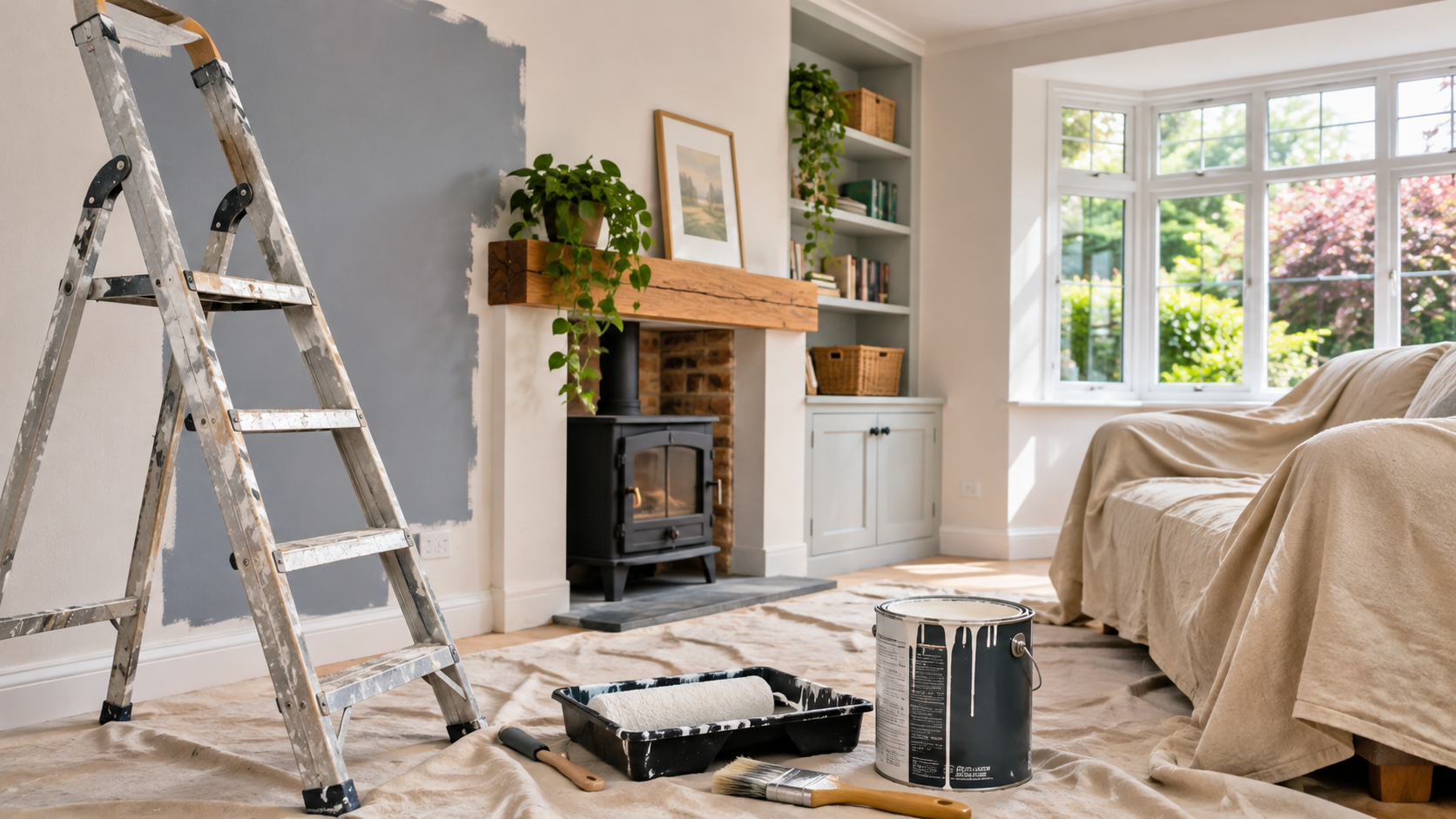
Renovating your home doesn’t have to involve major building work or an enormous budget. Small, carefully chosen improvements can transform tired rooms, improve everyday comfort and give your property a fresh appearance without spending thousands of pounds.
Whether you’re updating a kitchen, refreshing a bathroom or improving your living space, there are plenty of affordable DIY projects that can make a noticeable difference. In this guide, we’ll explore ten budget-friendly renovation ideas for UK homeowners, with practical advice to help you plan each project and make the most of your money.
1. Refresh Your Walls with Paint
One of the simplest and most affordable ways to transform a room is with a fresh coat of paint. Tired walls, faded colours and scuffed surfaces can make even a well-maintained home look dated. Repainting can brighten the space and create a completely different atmosphere without changing the furniture or layout.
Start by cleaning the walls, filling small cracks and holes, and sanding any rough patches. Protect floors and furniture with dust sheets, and use masking tape around skirting boards, switches and door frames. Apply a suitable primer where needed before finishing with two coats of quality interior paint.
For a modern appearance, consider warm neutrals, soft greens or muted blues. Alternatively, a single feature wall can introduce colour without overwhelming the room.
Budget guide: Approximately £40–£120 for a small room, depending on the paint, preparation materials and equipment required.

2. Update Kitchen Cabinet Doors and Handles
A complete kitchen replacement can cost thousands of pounds, but you can often achieve a noticeable improvement by updating your existing cabinets. If the cabinet units are structurally sound, replacing tired handles, repainting doors or fitting new door fronts can give your kitchen a fresh appearance for considerably less money.
Start by inspecting the cabinet doors, hinges and frames. Tighten loose fittings and replace damaged hinges where necessary. If you’re painting the doors, remove them first, clean away grease thoroughly and lightly sand suitable surfaces before applying the recommended primer and cabinet paint.
Changing old handles for modern brushed steel, matt black or brass-effect fittings is another inexpensive improvement. Measure the distance between the existing screw holes before buying replacements to avoid unnecessary drilling.
For a coordinated finish, consider updating the kitchen splashback or adding under-cabinet LED lighting, provided any electrical work is carried out safely and in accordance with applicable regulations.
Budget guide: Approximately £30–£200 for new handles, paint and basic materials. Replacement doors or additional improvements will increase the cost.

3. Refresh Your Bathroom Without Replacing the Suite
Replacing an entire bathroom suite can be expensive, but smaller improvements can make an older bathroom feel cleaner, brighter and more modern. If your bath, toilet and basin are still in good condition, focus on refreshing the surrounding finishes rather than replacing everything.
Start by removing mouldy or deteriorating silicone sealant around the bath, shower and basin. Clean and dry the surfaces thoroughly before applying fresh sanitary-grade silicone suitable for wet areas. Replacing discoloured sealant can make a surprisingly noticeable difference.
Next, consider refreshing the tile grout, replacing an outdated toilet seat or installing a new mirror. Modern towel rails, matching accessories and improved storage can also help create a more coordinated appearance.
If the bathroom walls need attention, use paint specifically designed for humid environments. Make sure ventilation is adequate, particularly in bathrooms without opening windows.
Budget guide: Approximately £40–£180 for sealant, grout products, paint and accessories. New taps or larger fittings will increase the cost.

4. Transform a Room with Budget-Friendly Flooring
Worn carpets, scratched floorboards and outdated flooring can make an otherwise attractive room look tired. Replacing the floor covering is often one of the most effective ways to refresh a space without carrying out major structural work.
For a relatively inexpensive update, consider sheet vinyl, laminate flooring or luxury vinyl tiles (LVT). These materials are available in a wide range of wood, stone and tile-effect finishes, allowing you to achieve a modern appearance without the cost of natural materials.
Before purchasing flooring, measure the room carefully and allow extra material for cutting and wastage. Check that the subfloor is clean, dry, level and suitable for your chosen product. Some flooring requires an underlay or moisture barrier, so always follow the manufacturer’s installation instructions.
In kitchens, bathrooms and utility rooms, choose flooring specifically rated for moisture-prone environments. Standard laminate is not always suitable for areas exposed to standing water.
If your existing wooden floorboards are in reasonable condition, sanding and refinishing them may provide an attractive alternative to installing a completely new floor.
Budget guide: Approximately £100–£300 for materials for a small room, depending on the floor area and product selected. Subfloor repairs, trims, underlay and professional fitting may cost extra.

5. Create More Space with Clever Storage Solutions
Limited storage can make even a well-decorated home feel cluttered. Fortunately, improving storage doesn’t always require expensive fitted wardrobes or major alterations. Simple shelving, wall-mounted organisers and better use of unused spaces can make a significant difference.
Start by identifying areas where additional storage would be most useful. Alcoves, spaces beneath staircases and empty sections of wall can often accommodate shelves or compact storage units. Floating shelves are particularly effective in living rooms, bedrooms and home offices because they provide practical storage without taking up valuable floor space.
In kitchens, consider adding internal cupboard organisers, pull-out baskets or wall-mounted rails for utensils. Bedrooms can benefit from under-bed storage boxes, additional wardrobe shelving and hooks behind doors.
For a more personalised result, build simple timber shelves using readily available softwood or plywood. Measure carefully, choose suitable brackets and ensure all wall fixings are appropriate for the wall construction and expected load. Heavy shelving should be securely fixed into suitable structural supports.
Finish the project by painting or staining exposed timber to complement the room’s existing decoration.
Budget guide: Approximately £30–£150 for basic shelving, brackets, organisers and finishing materials. Larger bespoke storage projects will cost more.

6. Refresh Interior Doors and Woodwork
Interior doors, skirting boards and architraves are often overlooked during home improvements, yet worn paintwork and damaged finishes can make an otherwise attractive room look neglected. Refreshing these features is a relatively inexpensive project that can noticeably improve the overall appearance of your home.
Begin by inspecting the doors and surrounding woodwork for scratches, dents, loose fittings and peeling paint. Fill minor imperfections with a suitable wood filler, allow it to dry and sand the surface smooth. Clean away dust and grease before applying primer where required.
For a contemporary finish, consider painting doors in soft white, warm grey or a contrasting colour that complements the walls. Use a durable paint designed for interior woodwork, and follow the manufacturer’s guidance on preparation, drying times and application.
Replacing outdated door handles can also make a substantial difference. Modern lever handles in brushed nickel, matt black or brass-effect finishes can give existing doors a more expensive appearance without requiring complete replacement.
Before purchasing new handles, check the existing latch dimensions, spindle size and fixing positions to ensure compatibility. Fire-rated doors must retain their required fire-resisting performance, including appropriate hardware and self-closing devices where applicable.
Budget guide: Approximately £40–£150 for paint, preparation materials and replacement handles for a small number of doors. Costs will vary depending on the condition of the woodwork and the quality of the fittings selected.

7. Upgrade Your Lighting for a Fresh New Look
Lighting has a major influence on how a room looks and feels. Poorly positioned or outdated lighting can make a space appear dull, while carefully chosen lighting can create a brighter, more welcoming atmosphere without requiring expensive renovations.
One of the easiest improvements is replacing older light bulbs with energy-efficient LED alternatives. LEDs are available in different colour temperatures, allowing you to choose warm white lighting for living rooms and bedrooms or a cooler, brighter light for kitchens and workspaces.
Consider introducing several sources of light rather than relying entirely on one central ceiling fitting. Table lamps, floor lamps and plug-in LED strips can provide additional illumination while creating a more comfortable atmosphere.
In kitchens, adhesive-backed LED strips designed for under-cabinet use can improve visibility around worktops. Battery-operated or plug-in lighting can also be useful inside cupboards, wardrobes and other poorly lit spaces.
When choosing new lighting, check the brightness, colour temperature and energy rating. Make sure any products used in bathrooms or outdoor areas have the appropriate protection rating for their intended location.
For safety, use suitable certified products and avoid overloading sockets. Changes to fixed electrical wiring should be assessed and carried out by a suitably qualified electrician, with applicable UK electrical and building regulations followed.
Budget guide: Approximately £25–£150 for LED bulbs, lamps, plug-in lighting and accessories. Professional electrical installation or replacement ceiling fittings will increase the cost.

8. Refresh Your Kitchen or Bathroom Splashback
A tired or outdated splashback can make a kitchen or bathroom look older than it really is. Fortunately, updating this relatively small area can create a noticeable improvement without the expense of replacing cupboards, worktops or bathroom fittings.
If the existing tiles are in good condition, start by thoroughly cleaning them and removing any grease, limescale or staining. Refreshing discoloured grout with a suitable grout cleaner or grout-renewal product may be enough to restore a cleaner appearance.
For a more substantial transformation, consider replacing a small section of tiles or installing a decorative splashback panel. Ceramic tiles, glass-effect panels and waterproof wall panels are available in a wide range of colours and finishes to complement both modern and traditional interiors.
Self-adhesive splashback products can also provide a relatively inexpensive decorative update, but check the manufacturer’s instructions carefully. Not all products are suitable for wet areas, high temperatures or installation behind a hob.
Before fitting a new splashback, make sure the wall surface is clean, dry, sound and level. Use appropriate adhesives, grout and sealants for the selected material and installation location. In bathrooms, pay particular attention to waterproofing around baths, basins and showers.
Choose a finish that complements the existing cupboards, worktops and flooring. Neutral colours can create a timeless appearance, while patterned tiles or contrasting colours can introduce a distinctive feature.
Budget guide: Approximately £40–£180 for a small DIY splashback project, depending on the material, area covered and preparation required. Specialist glass panels or professional installation will cost more.

9. Improve Your Home’s Kerb Appeal
The outside of your home creates the first impression for visitors and potential buyers. Fortunately, improving kerb appeal doesn’t necessarily require expensive landscaping or major building work. A few carefully chosen improvements can make the entrance to your property look cleaner, more welcoming and better maintained.
Start by cleaning the front door, entrance steps, pathways and surrounding surfaces. Remove weeds, clear leaves and tidy any overgrown plants. If your front door is looking tired, a fresh coat of suitable exterior paint can transform its appearance for relatively little money.
Replacing worn house numbers, a damaged letterbox or outdated door furniture can also create a more polished finish. Choose fittings that complement the style of the property and are designed to withstand outdoor conditions.
Consider adding a pair of attractive planters near the entrance or introducing low-maintenance plants to brighten the space. Solar-powered garden lights can improve the appearance of pathways and entrances without requiring new electrical wiring.
If you have a small front garden, refreshing the borders with mulch or decorative gravel can provide a tidy, low-maintenance finish. Ensure that any changes to ground levels or paving do not obstruct drainage or bridge the property’s damp-proof course.
Before painting or altering the exterior of a listed building or a property subject to planning restrictions, check whether permission is required.
Budget guide: Approximately £40–£200 for exterior paint, plants, decorative accessories and basic cleaning materials. Larger landscaping or paving projects will cost more.

10. Improve Comfort by Draught-Proofing Your Home
Draught-proofing is one of the most practical and affordable home improvements for UK homeowners. Unwanted gaps around doors, windows and floorboards can allow cold air to enter, making rooms uncomfortable and increasing the amount of energy needed for heating.
Begin by checking external doors and windows for noticeable draughts. Worn weather seals, poorly fitting doors and gaps around frames are common sources of heat loss. Self-adhesive draught-excluding strips, suitable brush seals and replacement weather seals can often improve comfort without requiring expensive replacement windows or doors.
For external doors, consider fitting a letterbox draught excluder and a suitable door-bottom seal. Where gaps exist around skirting boards or floorboards, appropriate flexible fillers or sealants may help reduce unwanted air movement.
Thick curtains or thermal-lined window coverings can also improve comfort, particularly in older properties with less efficient glazing. Make sure curtains do not obstruct radiators or other heating appliances.
When draught-proofing, it’s important to maintain adequate ventilation. Never block purpose-provided ventilation openings, air bricks or vents required for fuel-burning appliances. Rooms containing gas fires, boilers or other combustion appliances may require specific ventilation arrangements.
In older properties, investigate persistent damp or condensation before sealing gaps, as restricting airflow without addressing moisture problems can make conditions worse.
Budget guide: Approximately £20–£120 for draught-excluding strips, door seals, suitable fillers and basic materials. Larger improvements or professional repairs will increase the cost.

Final Thoughts: Small Improvements, Big Results
Improving your home doesn’t always require a large renovation budget. As these ten projects demonstrate, relatively small changes can make a noticeable difference to the appearance, comfort and practicality of your living space.
From refreshing tired walls and updating kitchen cabinets to improving storage, lighting and insulation against draughts, there are plenty of affordable ways to give your home a new lease of life.
The key is to prioritise improvements that will make the greatest difference to your everyday life. Start with one manageable project, establish a realistic budget and choose materials that offer a good balance between quality, durability and cost.
Before beginning any renovation, consider the condition of your property and whether the work requires specialist knowledge or professional assistance. Electrical installations, structural alterations and certain plumbing projects should always be approached with appropriate care.
With thoughtful planning, sensible spending and a little DIY effort, you can transform your home gradually without taking on an expensive full-scale renovation.
For more practical home improvement advice, woodworking projects and tool recommendations, explore the other guides available on Rivet & Rule.